Make Distant Caregiver Pet Alerts Actually Work with Official Steps

Distant caregiver pet alerts notify named people with clear pet care instructions when you can’t be reached, so someone can physically check on your animals quickly. The alert itself does nothing without a reachable caregiver who can get into your home. That combination, a working notification plus a person ready to act, is the entire point of the system.
TL;DR:
- Automated wellness-check services are essential for catching situations where you become unreachable while your pets remain at home safely.
- Community and shelter alerts are most useful for quickly locating a missing pet, whereas wellness checks are designed to notify designated caregivers when you are incapacitated.
- Regular testing of contact information, access, and escalation timing every few months prevents failures caused by outdated details or unprepared caregivers.
- A layered setup that combines pet cameras, microchips, and automated alerts offers the most reliable protection, especially if you rely on cellular or internet connectivity.
- Most solo owners should prepare at least two or three emergency contacts and keep instructions, keys, and medical info easily accessible for quick response.
Table of Contents
- What Are the Types of Distant Caregiver Pet Alerts?
- How Do You Set Up a Distant Caregiver Alert Plan?
- Who Should You Choose as a Remote Caregiver?
- Are Pet Cameras and GPS Trackers Enough on Their Own?
- How Often Should You Test and Update Your Alert System?
- Why a Pet-Focused Alert Matters for Solo Owners
- Start Your Free Trial and Test Your Escalation Plan
- Where to Find Official Emergency Pet Guidance
- Sources
- FAQ
What Are the Types of Distant Caregiver Pet Alerts?
Not every alert does the same job, and picking the wrong one for your situation wastes precious time. Some are built for a pet that’s already lost. Others exist to catch the moment you become unreachable, which is a very different emergency.
- Community and app-based lost-pet broadcasts. These push a photo and description to nearby users within a set radius the moment you report a missing pet. Some platforms base that radius on where you trigger the alert, so activating it near your pet’s last known location matters more than doing it from your phone at work.
- Shelter email-alert systems. Many shelter software systems let you register a lost-pet profile and receive an email notification whenever a matching animal is logged nearby.
- Microchip and shelter broadcast networks. A scanned microchip connects a found pet back to your registered contact info, which is why keeping that registration current matters as much as having the chip implanted.
- Automated wellness-check services. These don’t wait for a lost pet at all. They check in on you on a schedule, and if you miss a response, they escalate to named caregivers with your pet’s care details attached.
If your pet is already missing, community broadcasts and shelter alerts get you the most immediate ground-level help. If the emergency is that you’re unreachable while your pets are still safe at home, only an automated wellness-check service catches that gap.
How Do You Set Up a Distant Caregiver Alert Plan?
A good plan is built once and tested often. Here’s the order that actually works:
- Gather the basics. Clear, recent photos, microchip number, vet contact, medication list, and feeding schedule.
- Pick your channels. Decide whether alerts go by SMS, phone call, landline, or email, and list at least two or three emergency contacts, not just one.
- Set escalation timing. Decide how long is too long before a missed check-in triggers a call to your backup contact, and write down who holds a spare key.
- Register with shelter and email-alert services in your area and save your search criteria so a possible match reaches your inbox automatically.
- Build a Go Kit with food, medication, leash, and carrier, and place a visible pet-alert sticker on your door along with a written emergency contact sheet.
Pro Tip: Store your pet’s medical records, feeding schedule, and vet number somewhere a caregiver can reach in under a minute, not buried in a cloud folder they’ve never opened. A printed card on the fridge beats a shared document nobody remembers exists.
Who Should You Choose as a Remote Caregiver?
The caregiver on your list matters more than the alert system that reaches them. A friend three states away who loves your dog can’t feed him tonight. A neighbor with a key can.
- Prioritize proximity and confirmed availability. A caregiver who can physically reach your home quickly is more useful during a short-notice hospitalization than a well-meaning relative who lives hours away.
- Give them what they need in advance: keys, the carrier’s location, feeding and medication instructions, and your vet’s emergency number.
- Separate temporary checks from permanent guardianship. A temporary check means feeding, watering, and confirming your pet looks okay. Guardianship means someone is prepared to make veterinary decisions and provide long-term care. Document both roles separately, because they carry very different responsibilities.
- Confirm willingness periodically, not just once when you first ask. Circumstances change, and a caregiver who said yes last year might not be able to commit today.
Naming just one contact is a common mistake. Most solo owners need at least two or three backups, as outlined in guidance on pet emergency contacts, in case your first choice doesn’t answer.
Are Pet Cameras and GPS Trackers Enough on Their Own?
Not by themselves. Pet cameras and GPS trackers are genuinely useful for observation. A camera lets you watch your dog pace by the door. A tracker shows you where your cat wandered off to. But both typically depend on internet or cellular connectivity, and both notify your own device, not a caregiver standing by to act.
That’s the gap. If you’re the one who’s incapacitated, unconscious, or simply unreachable, a camera alert sitting unread on your phone helps nobody. Official emergency guidance treats these devices as complementary tools, not replacements for a written plan with designated caregivers. Microchips and shelter broadcast networks solve a different problem: reunifying a pet that’s already lost. The strongest setup layers all three. Use a camera for observation, a microchip for identification, and an automated wellness-check service for the specific job of reaching a caregiver when you can’t reach anyone yourself.

How Often Should You Test and Update Your Alert System?
An alert plan you never test is a plan you’re guessing about. Set a real cadence:
- Verify contact info monthly. Phone numbers change more often than people update their emergency lists.
- Test the full escalation chain quarterly, not just one contact. Confirm what happens if contact A doesn’t respond and the system moves to contact B.
- Confirm physical access works. Keys should actually open the door, and your caregiver should know exactly where the carrier and supplies live, not have to search for them mid-emergency.
- Update microchip registration and medical records annually, ideally around a vet visit when the information is already fresh.
The most common failure modes are outdated contact numbers, relying on an app your caregiver doesn’t have installed, and assuming someone has home access they were never actually given.
Pro Tip: Time your test. If your escalation window is set at four hours, actually check whether your backup caregiver can realistically get to your home in that window. A plan that works on paper can still fail on the clock.

Why a Pet-Focused Alert Matters for Solo Owners
General personal-safety apps notify someone that you’re unresponsive. They almost never tell that person what your dog eats, where the leash hangs, or which vet to call. Mypetssafetynet was built to close that specific gap. The service sends scheduled check-ins by SMS, phone call, or email, works with a landline so a smartphone isn’t required, and escalates to named emergency contacts with your pet’s actual care instructions attached if you miss a response.
That distinction matters most for solo pet owners, seniors living alone, and people managing a health condition that makes sudden hospitalization a real possibility. A camera shows you what’s happening at home. It doesn’t call your sister and tell her the cat needs his insulin at six.
— MyPetsSafetyNet
Start Your Free Trial and Test Your Escalation Plan
Mypetssafetynet is built specifically around pet care, not general personal safety, which means your named caregivers get feeding schedules, medication details, and vet contacts, not just a generic “check on this person” message. Setup takes less than 10 minutes, works with any phone through SMS or calls, and supports up to five pets and three emergency contacts with customizable escalation timing.
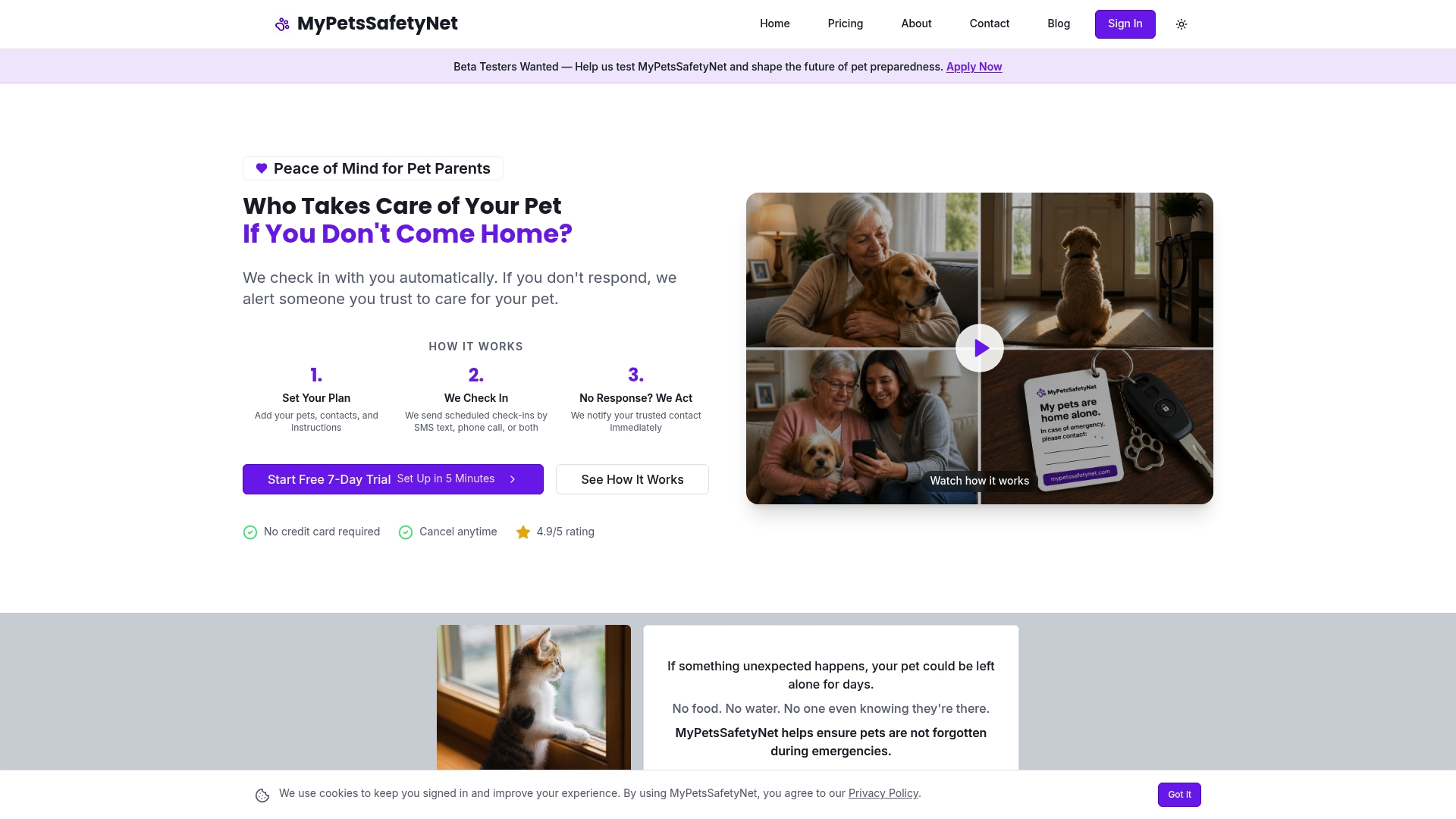
You don’t need a smartphone or a complicated app to get started. The Monthly plan runs $6.99 per month, and a 7-day free trial with no credit card required lets you run a full escalation test before you commit to anything. Set up your pet profiles, add your caregivers, and see exactly what they receive if you miss a check-in. If you rely on a landline, the service’s SMS and phone consent details explain exactly how multi-channel delivery works. Start the trial today and confirm your plan actually functions before you need it to.
Where to Find Official Emergency Pet Guidance
For broader disaster planning, Ready.gov’s pet preparedness guide and the CDC’s emergency pet safety page cover evacuation planning and medical records. Shelters and microchip registries maintain their own registration pages and terms, so check with your local shelter directly for its specific alert process.
Sources
- Ready
- Be prepared: pet safety in emergencies | CDC
- Making a plan for your pet | ASPCA
- Set up email alerts from shelter software systems to help locate your missing pet | LostDogsofAmerica
FAQ
What Is a Distant Caregiver Pet Alert?
It’s a notification sent to a designated person, by text, call, or email, letting them know they need to check on your pet because you’re unreachable. The alert typically includes care instructions so the caregiver knows exactly what to do once they arrive.
How Is This Different From a Pet Camera?
A pet camera notifies your own device when it detects motion or sound, which doesn’t help if you’re the one who’s unresponsive. A distant caregiver alert system instead escalates to a real person with your pet’s care details attached, which is the specific gap Mypetssafetynet is built to close.
How Many Emergency Contacts Should I List?
Most solo pet owners should list at least two to three backup contacts, since a single point of contact often fails to answer in time. Some automated wellness-check services support multiple emergency contacts per account.
How Much Does an Automated Pet Wellness Check Service Cost?
Mypetssafetynet’s Monthly plan is $6.99 per month, with a 7-day free trial and no credit card required to start.
How Often Should I Test My Pet Alert Plan?
Verify your emergency contacts’ phone numbers and availability monthly, and run a full escalation test quarterly to confirm the entire notification chain works. Update microchip registration and medical records at least once a year, ideally alongside a routine vet visit.