Pet-Friendly Care Facilities: What Seniors Need to Know
What is a pet-friendly care facility?
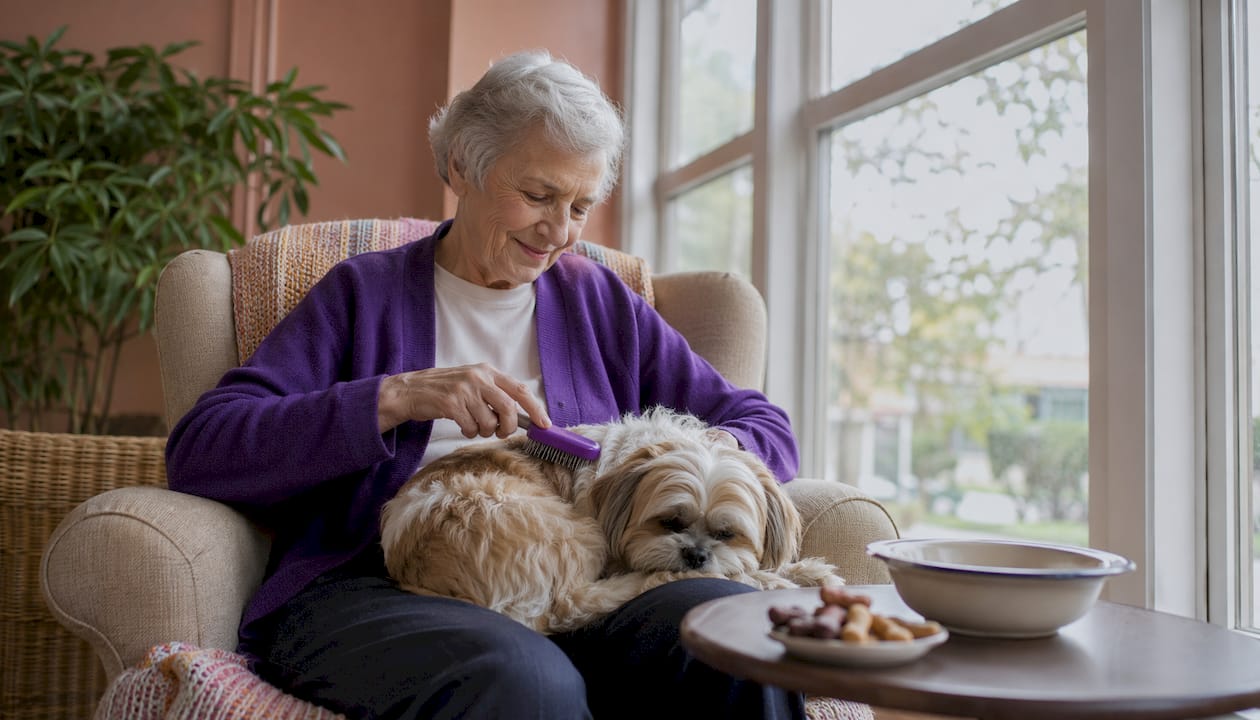
A pet-friendly care facility is an assisted living community that allows residents to keep and care for their own pets on site. About 75% of senior living communities in the U.S. describe themselves as pet-friendly, though support varies widely from one community to the next.
The term “pet-friendly” covers three distinct arrangements, and knowing the difference matters before you sign anything:
- Resident-owned pets allowed: Your pet lives with you in your room or apartment, and you remain responsible for daily care.
- Pet visits permitted: Family or friends can bring animals during visits, but no personal pets live on site permanently.
- Community or therapy animals: The facility keeps animals on site for all residents to enjoy, but you cannot bring your own.
Beyond these tiers, genuinely pet-accommodating communities typically offer amenities designed to make life easier for both residents and their animals:
- Designated dog runs or outdoor pet areas
- On-site grooming services or partnerships with local groomers
- Pet walking paths and socialization spaces
- Connections to third-party pet care vendors for walking, sitting, or veterinary transport
- Clear written policies on pet size, breed, and number limits (usually capped at two pets per resident)
Residents are expected to handle daily feeding, grooming, and exercise themselves. Staff involvement in routine pet care is the exception, not the standard. If you need support, some facilities arrange it through outside vendors, often at an additional cost.
How pets benefit seniors in assisted living
The case for keeping pets in senior living is well supported by research. Long-term pet ownership reduces anxiety, lowers blood pressure, and improves quality of life, particularly during the stressful transition into assisted living. That transition is one of the hardest adjustments older adults face, and a familiar animal companion can make it significantly more manageable.
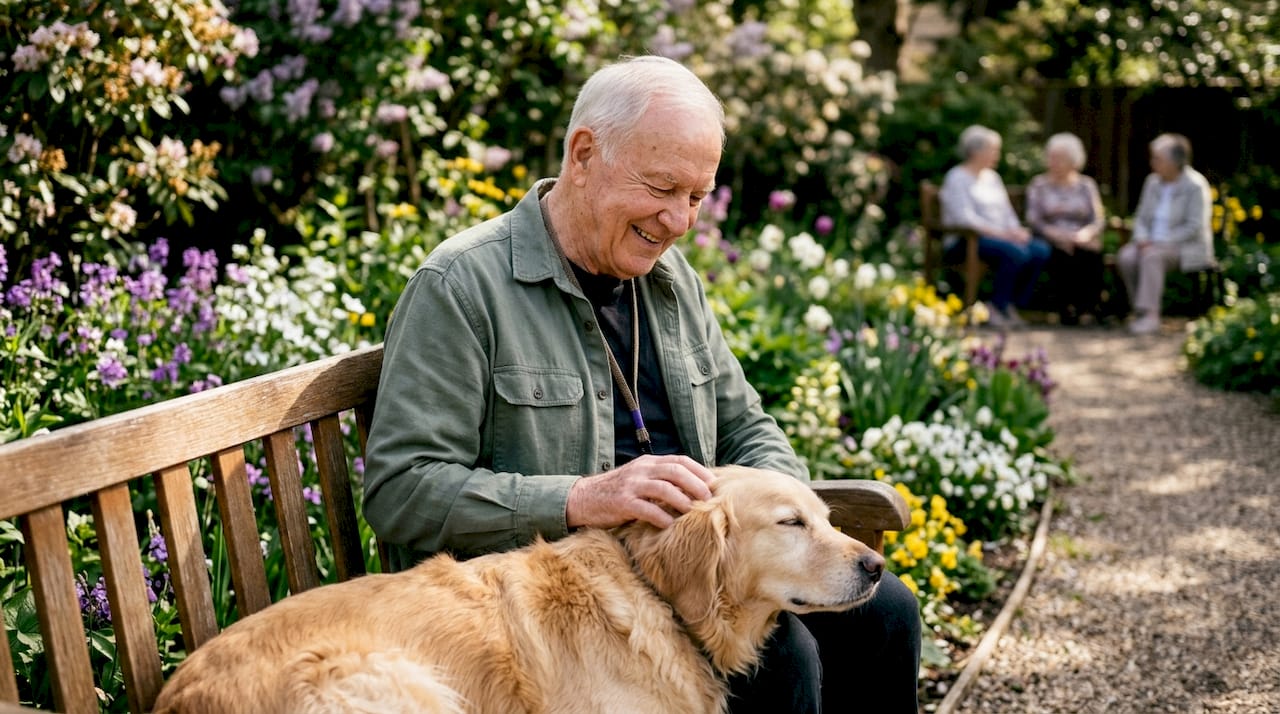
The benefits break down across three areas:
Mental and emotional health:
- Reduced feelings of loneliness and depression
- A stronger sense of purpose and daily routine
- Lower anxiety levels, especially during the adjustment period after moving
- Improved mood through physical touch and companionship
Physical health:
- Increased daily movement, particularly for dog owners who walk their pets
- Lower resting blood pressure over time
- Better sleep quality reported among pet owners in residential settings
Social health:
- Pets serve as natural conversation starters, encouraging interaction between residents
- Shared interest in animals creates community bonds among neighbors
- Pet owners tend to spend more time in common areas, reducing social isolation
For seniors who have lived with animals for decades, giving up a pet at the point of moving into care can feel like a significant loss. Facilities that allow residents to keep their companions help preserve a piece of daily life that genuinely supports well-being.
Policies and considerations before bringing your pet
Not every facility that calls itself pet-friendly will work for your situation. Policies differ enough that you need to ask specific questions before committing to a community.
Common restrictions and requirements include:
- Size and breed limits: Many facilities cap dogs at a certain weight, and some restrict breeds perceived as higher risk.
- Number of pets: Two is typically the maximum, though some communities allow only one.
- Vaccination records: All pets must be current on vaccinations, and you’ll likely need to provide documentation at move-in.
- Health and temperament: Some facilities require a behavioral assessment, particularly for dogs. The American Kennel Club’s Canine Good Citizen certification is sometimes referenced as a benchmark for temperament.
- Contingency plans: Facilities commonly require you to name a contact who will take responsibility for your pet if you can no longer care for it.
- Pet fees: Expect a one-time deposit, monthly pet fee, or both. These vary by facility and are not always disclosed upfront.
- Exotic and undomesticated animals: Birds, reptiles, and other non-traditional pets are usually restricted or prohibited entirely.
Facilities often impose these restrictions to protect other residents, manage liability, and maintain a safe shared environment. That’s reasonable, but it does mean you need to verify every detail in writing.
Pro Tip: During any facility tour, ask to see the written pet policy, not just a verbal summary. Policies can change, and having the specifics in writing protects both you and your pet.
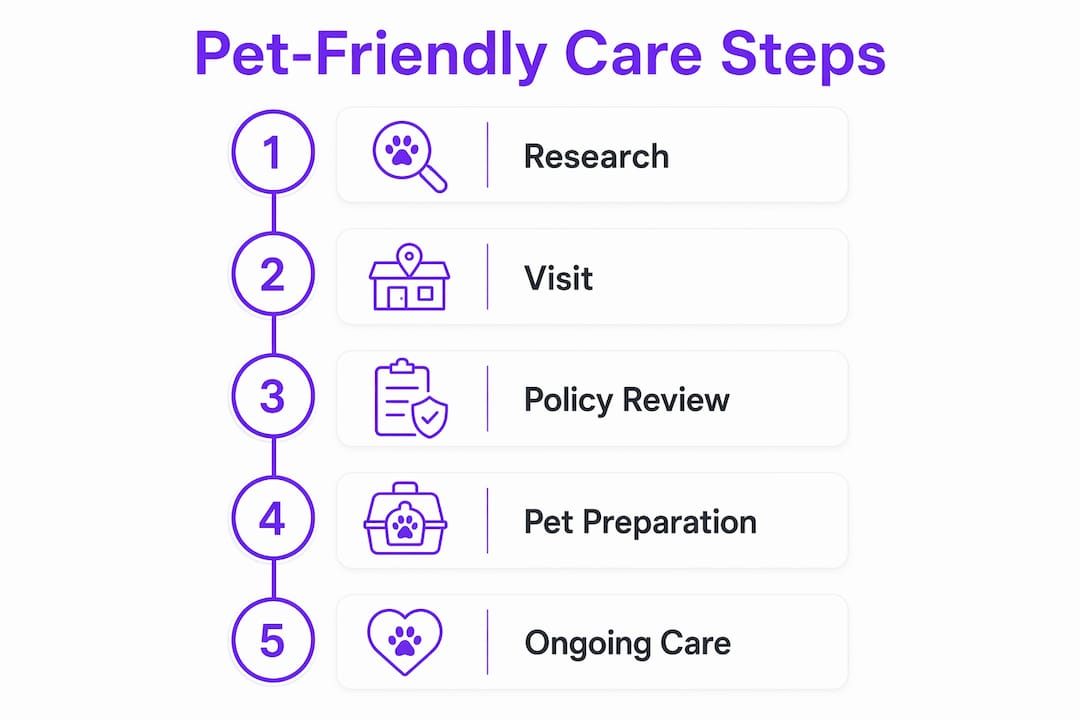
How to find and choose a pet-friendly assisted living community
The phrase “pet-friendly” on a facility’s website doesn’t tell you much on its own. Your job is to find out exactly which of the three arrangements applies and whether the community’s specific rules work for your pet.
Start with these questions during your search:
- Does the facility allow resident-owned pets, or only visits and therapy animals?
- What are the size, breed, and number restrictions?
- Is there on-site staff support for pet care, or do residents arrange outside help?
- What pet-specific amenities are available (dog parks, grooming, walking areas)?
- What fees apply, and are they one-time or recurring?
- What happens if a resident’s health declines and they can no longer care for their pet?
- Is there a waiting list for pet-friendly units specifically?
For locating communities, the National Center for Assisted Living offers a searchable database of facilities by state, including pet policy details. You can also work with a senior living advisor who specializes in matching families with communities based on specific needs, including pet accommodation.
One detail that catches families off guard: a facility may promote pet therapy programs prominently while not permitting personal pets at all. Always confirm which category applies before making any decisions. For a broader look at support options available to seniors with pets, the pet care resources guide covers services worth knowing about.
Pet therapy and communal animals: a different kind of connection
Not every senior wants the full responsibility of owning a pet in assisted living. Pet therapy programs and community-owned animals offer a meaningful alternative, and many facilities offer both alongside resident pet policies.
Pet therapy programs and communal animals provide interaction benefits without requiring residents to take on any care responsibilities. Therapy animals visit on a scheduled basis, handled by trained volunteers or certified handlers, and residents simply enjoy the interaction.
Typical features of these programs include:
- Scheduled visits from certified therapy dogs and cats, sometimes weekly or biweekly
- Occasional visits from farm animals, including goats and rabbits, which tend to generate strong resident engagement
- Community cats or dogs that live on site and are cared for by staff
- Animal-assisted activities integrated into group programming, such as grooming sessions or obedience demonstrations
- Partnerships with local humane societies or rescue organizations
The emotional and social benefits of these programs are real. Residents who interact with therapy animals report lower stress and greater engagement with their surroundings. For someone who loves animals but isn’t in a position to manage daily pet care, these programs fill an important gap without adding burden.
Common misconceptions about pet-friendly care
The biggest misunderstanding families carry into this process is the assumption that “pet-friendly” means the facility shares responsibility for the animal. It doesn’t. Most facilities require the resident to independently care for their pet, and shared or community care is rare without additional fees and formal arrangements.
That distinction has real consequences. If a resident’s health declines to the point where they can no longer walk, feed, or manage their pet’s needs, the facility is not automatically obligated to step in. In practice, when a resident’s health declines, pet care responsibility typically shifts to family members, a hired pet sitter, or, in more serious cases, the pet may need to be rehomed.
Other misconceptions worth addressing:
- “Any pet is welcome.” Size, breed, and species restrictions are standard. A large, high-energy dog may not qualify even at a facility that broadly allows pets.
- “I can adopt a new pet after moving in.” Many facilities discourage or prohibit adopting an untrained or new pet after move-in, since adjustment challenges are harder to manage in a shared living environment.
- “Pet fees are minor.” Deposits and monthly fees vary, and they add up. Always ask for the full cost breakdown in writing.
Pro Tip: Before your loved one moves in, create a written contingency plan naming a specific person who will take the pet if care becomes impossible. Share this plan with the facility and keep a copy in your own records.
How pets affect facility insurance and liability
Bringing a personal pet into a care facility isn’t just a lifestyle decision. It carries insurance and liability implications that both residents and facilities take seriously.
Facilities typically require residents to carry renter’s insurance that includes pet liability coverage. If a pet injures another resident or a staff member, the pet owner is responsible, not the facility. This is why many communities require proof of insurance at move-in alongside vaccination records. Some facilities also require residents to sign a liability waiver specifically related to their pet’s behavior.
From the facility’s perspective, allowing pets affects their general liability coverage and may require additional policy riders. Dog bites and allergy-related incidents are the most common concerns. This is part of why breed restrictions exist: they’re as much about managing insurance risk as they are about resident safety. Residents who want to bring a dog should be prepared to provide behavioral history and, in some cases, complete a formal temperament evaluation before approval.
Resident and staff support for pet care
Daily pet care in assisted living is primarily the resident’s responsibility, but that doesn’t mean you’re entirely on your own. The level of support available depends heavily on the individual facility.
Some communities actively coordinate pet care assistance through outside vendors, including dog walkers, groomers, and pet sitters. Others maintain a list of vetted local providers that residents can contact independently. For grooming specifically, services like professional pet grooming can be arranged to come directly to the facility, reducing the logistical burden on residents who have limited mobility.
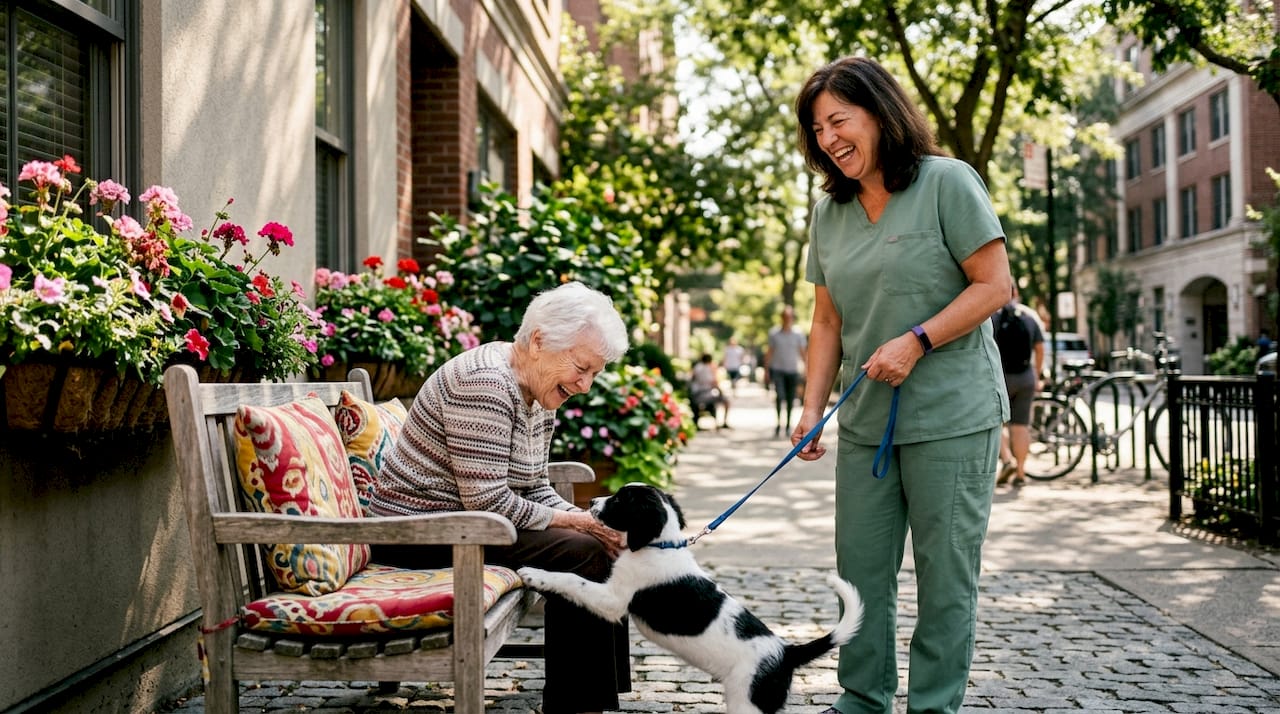
Staff involvement varies. In some facilities, aides may assist with feeding or medication administration for a pet if it’s part of a resident’s care plan. In others, staff will not touch a resident’s animal under any circumstances. The role of home aides in supporting pet care is worth understanding before you assume any level of help is available.
The most practical approach is to build a support network before move-in. Identify a family member, neighbor, or hired caregiver who can step in for daily tasks if you have a difficult day. Facilities appreciate residents who come in with a plan already in place.
Key Takeaways
Pet-friendly assisted living communities allow residents to keep personal pets on site, but the level of support, amenities, and restrictions varies enough that verifying every detail before committing to a facility is the most important step you can take.
| Point | Details |
|---|---|
| Three tiers of “pet-friendly” | Facilities may allow resident pets, permit only visits, or offer community animals. Confirm which applies. |
| Resident responsibility is standard | Most facilities require residents to independently care for their pets; shared care is rare without extra fees. |
| Many U.S. communities allow pets | About 75% of senior living communities in the U.S. describe themselves as pet-friendly, though support and policies differ significantly across communities. |
| Contingency planning is required | Facilities typically require a named contact to take over pet care if a resident’s health declines. |
| Mypetssafetynet supports emergency readiness | Mypetssafetynet notifies emergency contacts to check on both you and your pet if something unexpected happens. |
The part most families overlook
The conversation around pet-friendly assisted living tends to focus on whether a facility allows pets. That’s the right starting question, but it’s not the most important one. The harder question is what happens when a resident’s ability to care for their pet changes, and that question rarely gets asked until there’s a crisis.
Pets provide genuine, research-supported benefits for seniors. The anxiety reduction, the sense of purpose, the daily structure of caring for another living creature: these aren’t small things. They’re often what makes the difference between a resident who thrives in assisted living and one who withdraws. Facilities that understand this invest in real infrastructure, not just a policy that technically permits animals.
At the same time, the responsibility gap is real. A facility that allows your dog but provides no support infrastructure puts the entire burden on you and your family. That’s manageable when health is stable. It becomes a serious problem quickly when it isn’t. Families who plan for that contingency before move-in, not after, protect both their loved one and the animal.
The most overlooked piece of this planning is emergency preparedness. What happens if a resident has a medical event and no one knows the pet is alone in the room? That specific scenario is exactly where proactive planning, and the right support system, makes all the difference.
Your pet’s safety net, even in assisted living
Mypetssafetynet was built for exactly the situation that assisted living families worry about most: what happens to your pet if something unexpected happens to you?
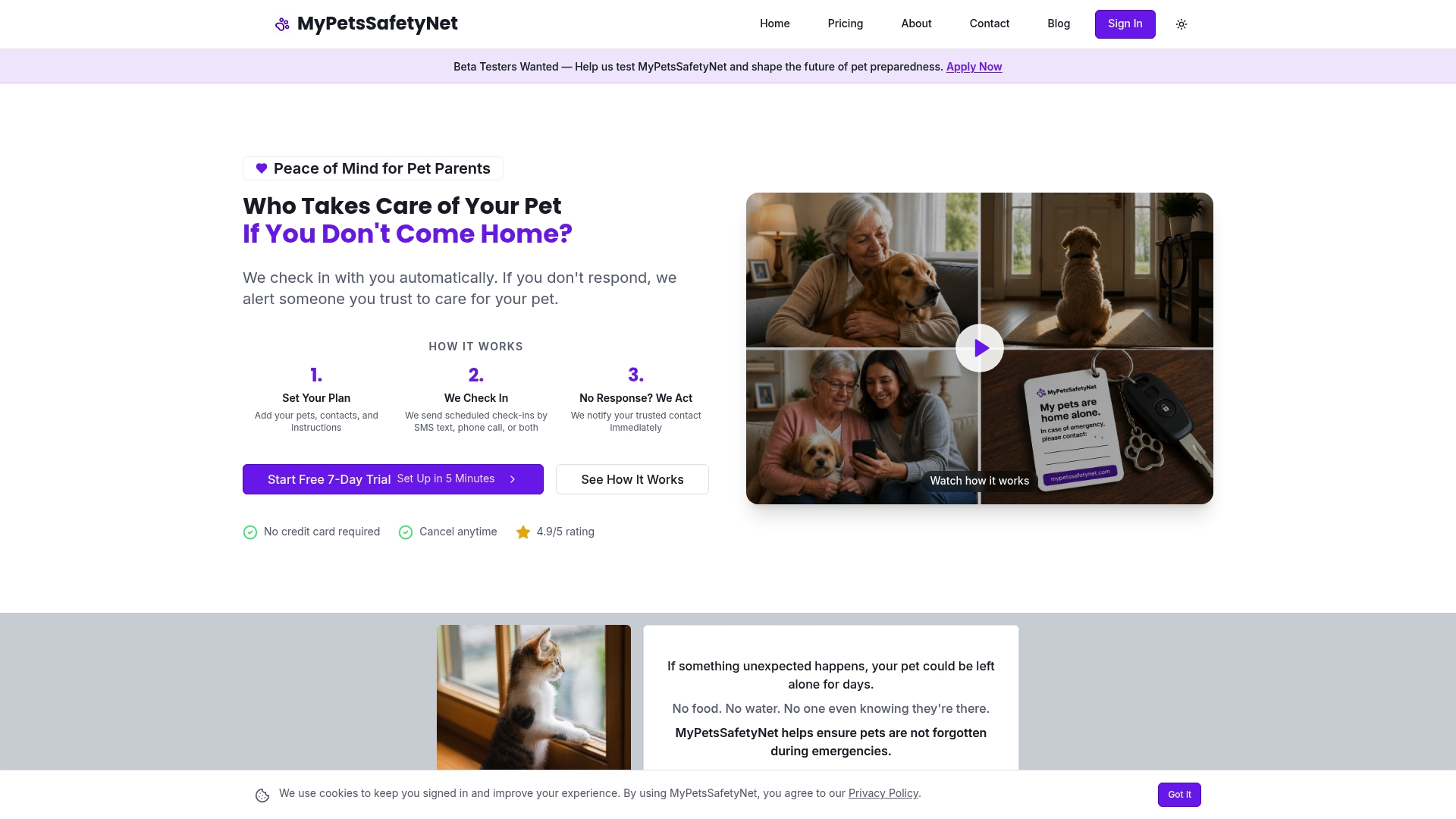
Even in a well-run pet-friendly community, there’s a gap between the moment something goes wrong and the moment someone checks on your animal. Mypetssafetynet closes that gap by notifying your designated emergency contacts promptly, so they can check on both you and your pet. Setup is straightforward, and it’s designed specifically for seniors who live with pets and want the peace of mind that their animal won’t be left alone.
If you’re aging alone with pets or supporting a parent through an assisted living transition, this kind of proactive planning is one of the most caring things you can do. Visit Mypetssafetynet to learn how the wellness check-in service works and get started today.
Pro Tip: Set up your emergency contact plan before move-in day, not after. Having it in place from day one means your pet is protected from the start.