Hours, Not Days: Automated Cat Owner Emergency Plan for Solo Owners

The fastest way for a solo cat owner to make sure their cat is cared for during an emergency is to enroll in an automated wellness check that notifies prebriefed emergency contacts and delivers a one-page pet-care profile the moment you fail to respond. An automated wellness check service can build this kind of cat owner emergency plan. From there, your next steps are simple: set up daily check-ins, write your one-page plan, and name your backups.
TL;DR:
- Automated daily check-ins with multi-channel alerts ensure someone notices a missed response within hours, not days, reducing danger for cats left alone.
- A one-page emergency care plan should include detailed feeding, medication, vet contacts, behavioral notes, signed authorizations, and supply locations.
- Naming at least two backup caregivers with current agreements and detailing access methods like lockboxes and ID tags improves response times during an emergency.
- Regularly testing the check-in system and reviewing the plan annually helps identify gaps, especially in caregiver preparedness and supply readiness.
- Pre-packed emergency kits and staged evacuation supplies, including vaccination records and pet-friendly shelter info, are critical for quick action during disasters.
Table of Contents
- Your Cat Owner Emergency Plan: What to Do in the Next Hour
- How Does an Automated Wellness Check-In Work?
- Build a One-Page Emergency Pet-Care Plan
- Choosing Your Emergency Contacts: Why Two Isn’t Enough
- Access and Authorization: Getting Caregivers in the Door
- Test, Rehearse, and Review Your Plan Every Year
- The Daily Check-In as an Early Warning System
- What Goes in a Cat’s Emergency Supply Kit
- Planning for Natural Disasters and Evacuating With Your Cat
- Where to Find Temporary Pet Care During a Crisis
- Special Considerations for Senior or Chronically Ill Cats
- Helping Your Cat Cope Emotionally During an Emergency
- Why Automation Closes the Highest-Risk Gap
- How MyPetsSafetyNet Fits Your Emergency Plan
- Sources
- FAQ
Your Cat Owner Emergency Plan: What to Do in the Next Hour
You don’t need a weekend to build a workable plan. You need about an hour and a short list of tasks that close the most dangerous gaps first.
- Enroll in a daily automated check-in service, or start manually texting a friend at the same time every day until you do.
- Write and print a one-page emergency pet summary with feeding, meds, and vet contact info.
- Send a digital copy of that summary to your emergency contacts right now.
- Name at least two backup caregivers and get their verbal “yes” today, not just their phone number.
- Make a wallet card or a visible notice near your front door listing your cat and two emergency contacts. The ASPCA recommends this exact step so first responders know an animal is inside.
- Put the carrier, medications, and litter supplies in one known spot. Nobody should have to search your apartment while your cat is anxious and hungry.
Pro Tip: Tape a small note inside a kitchen cabinet with the words “cat plan” and an arrow pointing to your one-page summary. Rescue workers and neighbors check kitchens first.
How Does an Automated Wellness Check-In Work?
An automated check-in runs on a simple loop: the service messages you on a schedule you choose, waits for a response, and escalates to your emergency contacts if you don’t answer in time. That escalation is the entire point. A missed response converts into an alert, and an alert converts into someone knocking on your door within hours instead of days.
The gap this closes is real. For people living alone, the distance between “something happened” and “someone noticed” often stretches into days rather than hours, and a cat left without food or a litter change for that long is in genuine danger. A daily trigger shrinks that window dramatically.
Look for these features before you commit to any service:
- Multi-channel alerts (SMS, phone call, and email) so a missed text doesn’t stall the whole system
- Multiple emergency contacts, not just one person who might be unreachable
- Customizable countdown intervals so you can set checks daily, every other day, or on your own schedule
- Pet profile attachment, so the alert itself carries feeding, medication, and vet details
- Audit logs, so you can confirm the system actually ran and messages actually sent
Some automated pet check-in tools support care circles of up to eight contacts with one-button confirmation, which shows how fast a well-designed escalation sequence can move once you skip the back-and-forth of a manual phone tree.
Pro Tip: Run your first check-in test on a day you’re already expecting a text from someone else. That way, a missed response gets caught twice.
Configuration takes fifteen minutes: pick your interval, add contacts, attach your pet profile, then send yourself a test alert before you rely on it.
Build a One-Page Emergency Pet-Care Plan
Your caregiver won’t have time to guess. A written plan that spells out feeding, medication, and contacts gives whoever steps in the confidence to act immediately instead of calling you first and waiting for an answer that isn’t coming, according to PetNPrep’s guidance on emergency pet-care documents.
Your one page should include:
- Identity details: name, breed, color, age, and microchip number if your cat has one
- Feeding schedule: exact brand, amount, and times, not “feed as needed”
- Medications: names, doses, how to administer them, and where they’re stored
- Vet and emergency clinic contacts, including the nearest 24-hour animal hospital
- Behavioral notes: hiding spots, calming techniques, and any comfort item your cat needs
- A signed authorization line for non-emergency veterinary care, plus a note on where the signed copy lives
- Supply locations: carriers, litter, food, meds, and spare keys, all in one line so nobody has to hunt
The CDC’s pet emergency preparedness guidance specifically calls out vaccination records and medication lists as core planning items, and it’s worth pulling both into your document rather than trusting memory. A full checklist of the documents worth gathering can help you make sure nothing slips through.
One detail people skip: a signed authorization statement isn’t a legal contract, but it functions as a practical green light. Most clinics accept a simple note allowing your named caregiver to approve non-emergency care in your absence, though it’s smart to ask your own vet in advance whether they want anything more formal for bigger procedures.
Choosing Your Emergency Contacts: Why Two Isn’t Enough
One emergency contact is a single point of failure. Two to four gives you real redundancy, since multiple caregivers with current agreements cover for each other when one person is traveling, sick, or simply doesn’t pick up.
Pick contacts based on:
- Proximity: someone who can reach your home in under 30 minutes
- Physical ability: can they lift a carrier, administer a pill, or handle a scared cat?
- Willingness: have they actually said yes, out loud, this year?
- Transportation: do they have a car if a vet visit is needed?
Brief every contact the same way. Share your one-page plan directly with them, confirm they know how to get into your home, walk through the vet authorization line together, and run a quick rehearsal so nobody is improvising during a real emergency. A detailed guide to naming and briefing 2 to 4 contacts walks through this exact process.
If you’re genuinely short on personal contacts, boarding facilities, local rescue groups, and community pet-support networks can serve as a fallback tier. Line one up before you need it, not after.
Access and Authorization: Getting Caregivers in the Door
A perfect plan means nothing if your caregiver can’t get inside. Pick one access method and confirm it works: a spare key with a trusted neighbor, a lockbox with a code you’ve shared, a keypad entry, or a standing arrangement with a house-sitter.
Keep your caregiver authorization simple. One or two sentences naming your caregiver, granting permission for non-emergency veterinary decisions, and stating where the signed version is kept usually covers it, based on PetNPrep’s template guidance.
Make sure your cat has visible ID and a microchip. Both speed up reunification and cut the odds of your cat ending up in a shelter intake line if it slips outside during the chaos of an emergency. And when sharing your plan digitally, limit what you send to what a caregiver actually needs. Your address and vet’s number matter; your full medical history doesn’t.
Test, Rehearse, and Review Your Plan Every Year
A plan you’ve never tested is a guess. Run these checks on a schedule:
- Trigger a test check-in and confirm your contacts actually receive the escalation alert.
- Do a full rehearsal: have a contact retrieve the carrier, follow your feeding notes, and call your vet using the number on file.
- Review the entire plan at least once a year, and again immediately after any health change, medication change, or contact change.
- Write down what went wrong during the rehearsal and fix it before the next test.
A short rehearsal tends to surface the gaps paperwork can’t catch. You’ll find out fast whether your cat tolerates the carrier or whether your backup caregiver can actually manage an insulin shot, and that’s exactly the kind of failure you want to discover on a Tuesday afternoon, not during a real crisis.
The Daily Check-In as an Early Warning System
Think of your daily check-in as a smoke detector, not a fire extinguisher. It doesn’t solve the emergency. It tells someone an emergency might be happening, fast enough for them to act while it still matters.
The mechanism is deliberately boring: you get a message, you tap a response, the clock resets. Skip a response, and the countdown you set kicks off an escalation to your contacts. No response after the countdown means your contacts get the full alert, which should include your pet profile, care instructions, and where supplies are kept, so they’re not calling you back with basic questions while your cat waits.
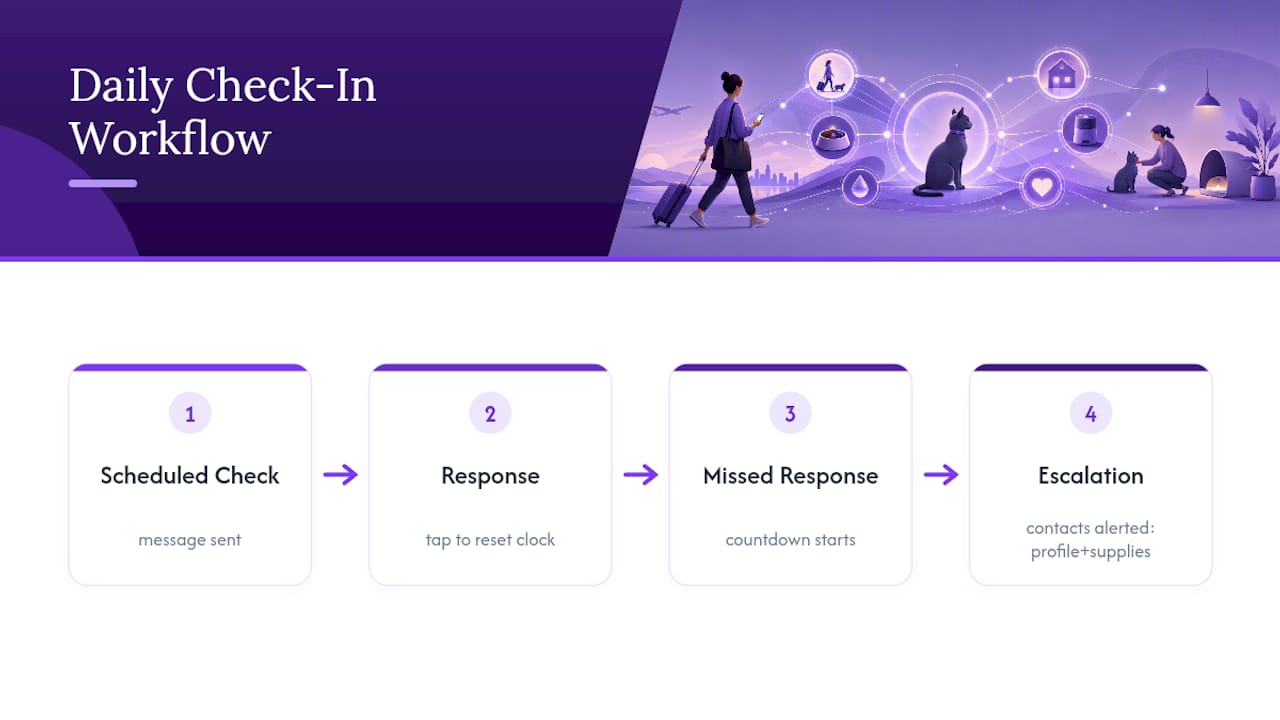
Set your interval based on your own risk. Daily works well for most solo owners, especially those managing a health condition. Every other day might suit someone with a strong support network who checks in with family regularly anyway. What matters is picking an interval you’ll actually respond to, since a check-in you constantly snooze or ignore trains everyone, including you, to treat alerts as noise.
This is also where automation earns its keep over a manual phone tree. A friend calling around to see if anyone’s heard from you takes hours of coordination. A system built to escalate automatically compresses that into minutes, and it does it the same way every single day, whether you remember to ask for help or not.
What Goes in a Cat’s Emergency Supply Kit
Pack a kit before you need one, and store it somewhere a caregiver can find without a scavenger hunt.
Your kit should hold:
- Food: at least a week’s supply in the original bag or a labeled container
- Water: a few sealed bottles, since tap water may be unreliable during some emergencies
- Medications: a labeled supply with dosing instructions attached, not loose pills in a bag
- A carrier: sturdy, familiar to your cat, and easy to grab on the way out the door
- Litter and a disposable tray: enough for several days away from your usual setup
Add a few extras that solo owners tend to forget: a two-week supply of any prescription food, a spare collar with ID tags, a recent photo of your cat in case of separation, and a copy of your one-page care plan tucked right into the kit itself. That way, whoever grabs the kit also grabs the instructions.
Keep the kit near your front door or in your car, not in a closet three rooms away. Emergencies rarely wait for convenient timing, and a kit you can grab in thirty seconds beats a perfectly organized one buried behind winter coats.
Planning for Natural Disasters and Evacuating With Your Cat
Disaster evacuation adds urgency your daily plan doesn’t usually need to handle. The core rule is simple: if you evacuate, your cat evacuates with you. Leaving a cat behind “just for a few hours” during a wildfire or flood warning is one of the most common and most avoidable mistakes owners make.
Keep your carrier, leash, and emergency kit staged somewhere you can reach in under a minute. Practice getting your cat into the carrier calmly before you’re doing it during a siren, because cats that have never been in a carrier tend to bolt and hide exactly when you need them contained fastest.
The CDC’s emergency preparedness guidance for pet owners recommends keeping vaccination records and a list of pet-friendly shelters or hotels on hand well before disaster season starts, since many emergency shelters won’t accept animals without current proof of vaccination. Map two possible evacuation routes and know which of your local hotels or shelters accept pets, since not every option along your route will.
If you live alone and a disaster hits while you’re away from home, your emergency contacts need the same access details you’d give them for a personal health emergency: where the carrier is, where the kit is, and how to get inside. This is one more reason a written plan pays off twice, once for personal emergencies and again for regional ones.
Where to Find Temporary Pet Care During a Crisis
When your usual contacts can’t take your cat and you can’t either, you need a tier of backup options mapped out ahead of time, not searched for in a panic.
Boarding facilities are the most straightforward option, though many require proof of current vaccinations, so keep that paperwork current and accessible. Veterinary clinics sometimes offer short-term boarding for existing patients, which can be useful if your cat already has a relationship with that vet. Local animal shelters and rescue groups occasionally run temporary fostering programs during regional emergencies, though space is often limited and first-come.
Call ahead. Don’t assume a facility has room or accepts walk-ins during a widescale event, since capacity fills fast when an entire community is evacuating at once. Save two or three phone numbers in your emergency plan itself, not just in your personal phone, so a caregiver acting on your behalf has them too.
Community resources matter more than people expect. Local pet-owner groups, breed-specific rescue networks, and even neighborhood social media groups sometimes coordinate emergency fostering faster than official channels can. Building one relationship with a nearby boarding facility before you need it beats calling ten strangers after disaster strikes.
Special Considerations for Senior or Chronically Ill Cats
A senior cat or one managing a chronic condition needs a more detailed plan, not a shorter one. Standard feeding notes and a vet’s phone number won’t cover a cat on twice-daily insulin or one that needs a specific kidney-support diet.
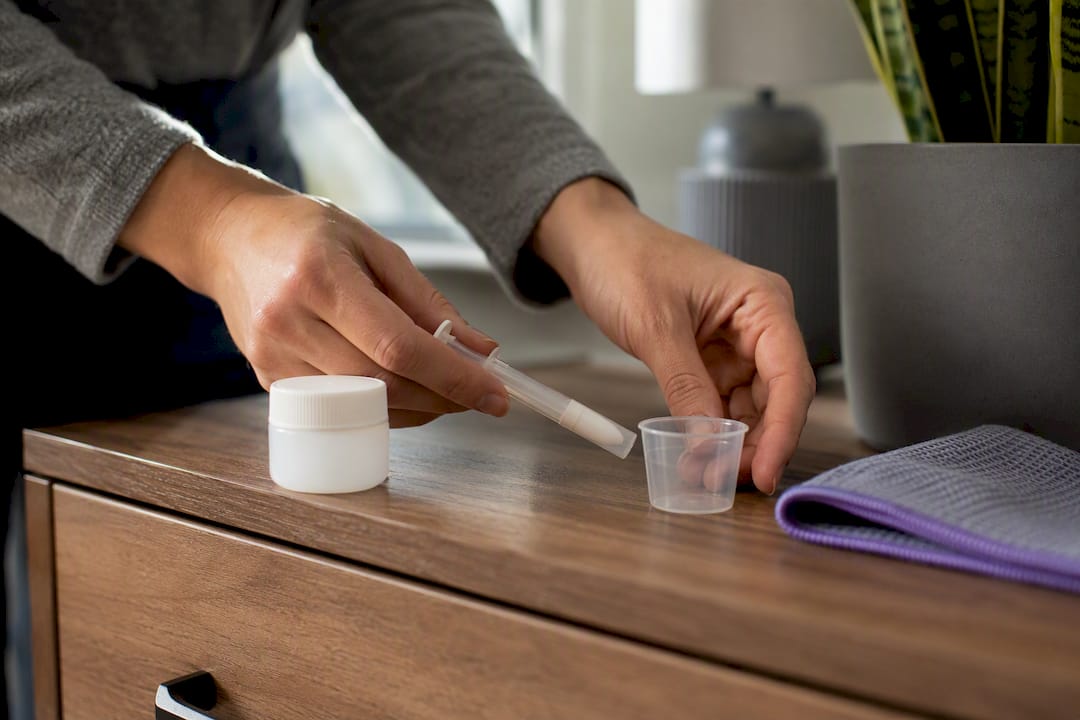
List every medication by name, exact dose, and administration time, along with what happens if a dose is missed or given late. Note any subcutaneous fluids, injections, or specialized handling your cat requires, and be explicit about who in your contact circle is actually trained to perform them. Not every willing caregiver can safely give a shot, and it’s better to know that now than during a crisis.
Include your specialist or internal medicine vet separately from your general practice vet if your cat sees both. Add mobility notes, too. An arthritic senior cat may need help getting into a low litter box or may struggle with stairs during an evacuation, details a caregiver would otherwise have to guess.
If your cat’s condition is unstable or progressing, treat your plan as a living document rather than something you write once and file away. Update it every time a dose changes, and make sure your emergency contacts get the new version immediately, not at your next annual review.
Helping Your Cat Cope Emotionally During an Emergency
Cats read disruption fast, even when they don’t understand the cause. A strange caregiver, an unfamiliar carrier, or a sudden change in routine can trigger stress responses that make an already difficult situation harder for everyone involved.
Practice carrier time regularly, not just before travel. A cat that associates the carrier with treats and calm moments handles a real emergency far better than one that only sees it once a year on the way to the vet. Leave a worn t-shirt or blanket with your scent in your cat’s usual resting spot; familiar smells reduce anxiety more than most owners expect.
Note your cat’s specific stress signals and calming triggers directly on your one-page plan. Some cats settle with a covered carrier and total quiet. Others do better with a specific toy or a particular person’s voice. A caregiver who knows this ahead of time can act on it immediately instead of guessing while your cat is already panicked.
If your cat has a strong bond with a specific person, list that person as a priority contact when possible. Emotional continuity, even briefly, can make the difference between a cat that eats and rests during a stressful transition and one that stops eating entirely.
Why Automation Closes the Highest-Risk Gap
The riskiest moment in any solo owner’s plan isn’t the missing supplies or the unsigned form. It’s the silence nobody notices. A written plan sitting in a drawer helps only after someone already knows to look for it, and that’s the exact gap a daily automated trigger is built to close.
We’ve seen the pattern play out the same way in different households: a missed check-in, an alert to a backup contact, and someone at the door within hours instead of days. Test your workflow this week, not someday.
— MyPetsSafetyNet
How MyPetsSafetyNet Fits Your Emergency Plan
Mypetssafetynet is built around the exact plan you just read: automated daily check-ins that escalate to your emergency contacts when you don’t respond, paired with a pet profile that carries your care instructions along with the alert. Instead of stitching together a text-message habit with a paper checklist and hoping a neighbor notices, you get one system that handles the trigger and the instructions together.
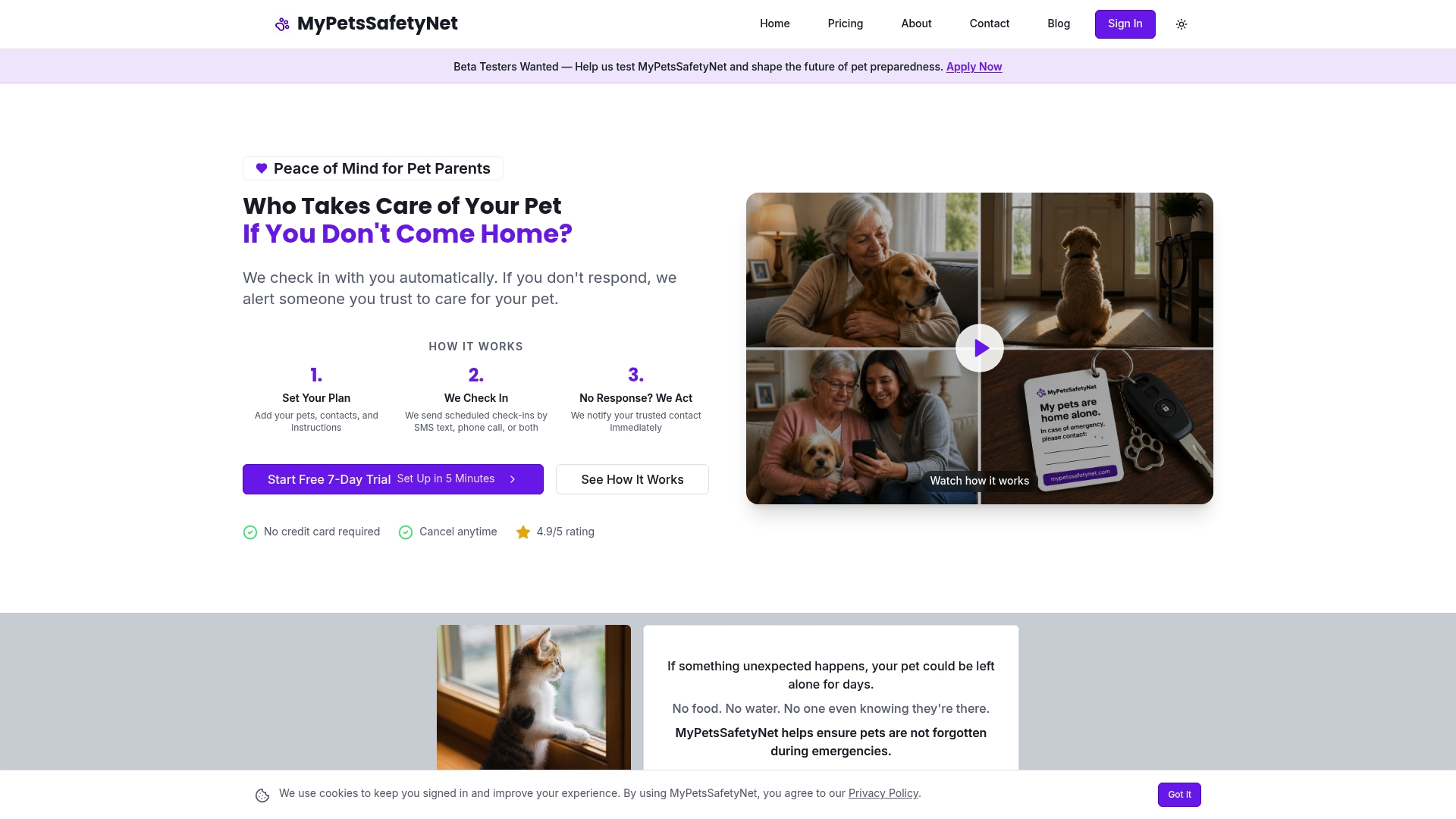
The service maps directly onto what this article covers. You set your check-in interval, add up to three emergency contacts, and attach care instructions for up to five pets, so the alert that goes out isn’t just “something’s wrong,” it’s “here’s exactly what to do about it.” The escalation workflow and audit logs mean you can confirm your setup actually works before you ever need it to.
If you want a printable starting point, the free pet care card gives you a one-page template you can fill out today. When you’re ready to put the full check-in and alert system to work, start a free trial on the main platform and test your escalation workflow this week, while it’s still just a drill.
Sources
Verify your plan against the ASPCA’s pet planning guidance, the CDC’s pet emergency preparedness resources, and PetNPrep’s emergency pet-care checklist. For templates, see Mypetssafetynet’s emergency pet-care guide.
- Making a plan for your pet | ASPCA
- Emergency preparedness for your pets | CDC
- Emergency Pet Care Plan for Hospitalization, Disability, or Travel - PetNPrep
FAQ
What Is a Cat Owner Emergency Plan?
It’s a written plan plus an automated check-in system that names emergency contacts and shares your cat’s care instructions if you become unable to respond.
How Many Emergency Contacts Should I Name?
Most solo owners should name two to four contacts, since a single backup is often unrealistic and multiple contacts provide redundancy if one is unavailable.
How Often Should I Check In?
Daily check-ins work best for most solo cat owners, though every-other-day intervals can suit those with strong existing support networks.
Can Mypetssafetynet Handle My Emergency Alerts?
Some services send scheduled check-ins across SMS, phone, or email and automatically alert your named contacts with your pet’s care profile if you miss a response.
What Should Be on My Cat’s Wallet Card?
List your cat’s name, your address, and two emergency contacts, since a visible card or notice helps first responders know a pet needs help.