Therapy Pet Care Responsibilities Guide for Owners

Therapy pet care responsibilities are defined as the full set of health, behavioral, documentation, and emergency planning duties required to keep a therapy animal fit for their role. This therapy pet care responsibilities guide covers everything from Pet Partners registration standards to caregiver selection and emergency protocols. The industry term for animals in this role is “therapy animal,” distinct from service animals and emotional support animals, each carrying different legal and care obligations. Therapy animals are not protected under the Americans with Disabilities Act, which means their access to facilities depends entirely on the owner’s documentation, training records, and the animal’s verified behavioral fitness.
What are the core health and behavioral care requirements for therapy pets?
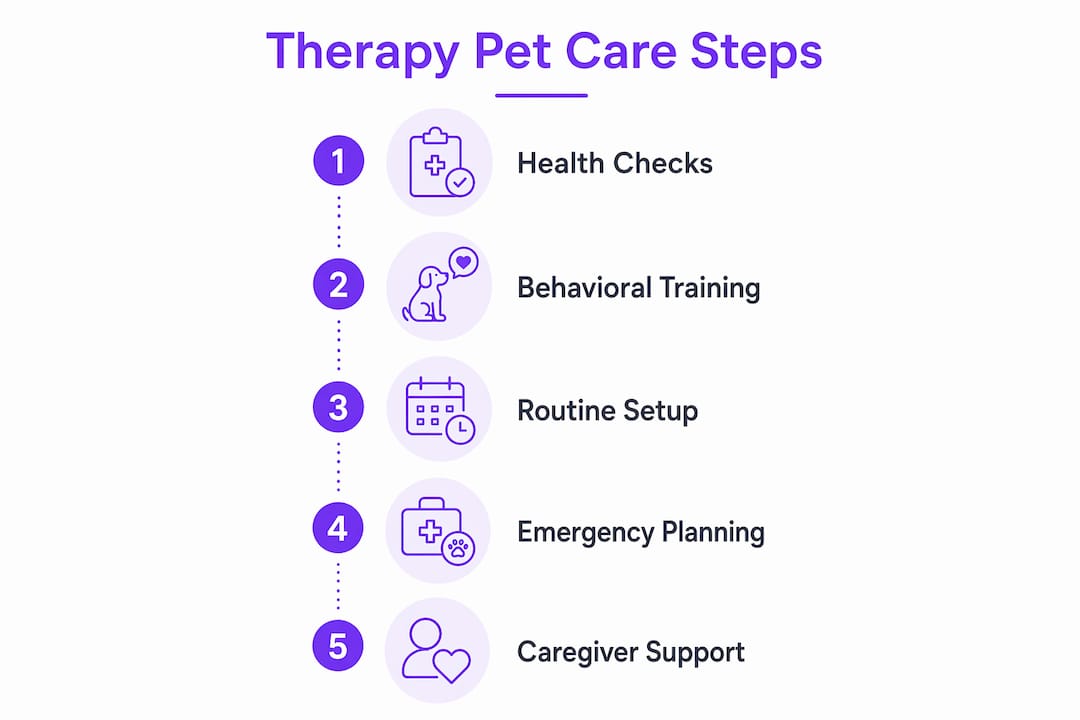
Therapy animals must meet strict health and behavioral standards before and during active service. Team registration requires handler course completion, a team evaluation, and a veterinarian health screening. That means your animal’s fitness is formally assessed, not assumed.
Routine veterinary care forms the backbone of responsible therapy animal management. Facilities commonly require proof of rabies vaccination and other core vaccines, along with veterinarian-verified health logs for access. Keeping these records current and organized prevents last-minute visit cancellations.
Behavioral fitness matters just as much as physical health. Therapy animals must tolerate new stimuli calmly and demonstrate good manners during team evaluations. An animal that shows stress signals, such as yawning, lip licking, or avoidance, is telling you they need a break before the next visit.
Ongoing socialization keeps behavioral standards high between evaluations. Regular exposure to varied environments, sounds, and people maintains the animal’s confidence. Watch for gradual changes in behavior over weeks, not just acute reactions during visits.
- Schedule veterinary wellness exams at least annually, or as your vet recommends for your animal’s age and species.
- Document vaccinations, parasite prevention, and any health changes in a dedicated log.
- Practice calm greetings, loose-leash walking, and tolerating handling by strangers at home.
- Learn your animal’s specific stress signals and act on them before fatigue sets in.
- Track behavioral changes over time alongside health notes.
Pro Tip: Keep a combined health and behavior log in a single notebook or app. Patterns you miss day-to-day become obvious when you review a month of entries.
How to prepare your therapy pet’s environment and routine for optimal performance
A calm, predictable home environment directly supports your therapy animal’s effectiveness in the field. Therapy animals need decompression time after visits because they absorb significant emotional and sensory energy during sessions. A quiet recovery space, away from household activity, is not optional. It is a welfare requirement.

Setting up that space takes less than an hour. Choose a low-traffic area with familiar bedding, water, and minimal noise. After every visit, give your animal uninterrupted rest before resuming normal household activity.
Pre-visit preparation also shapes performance. A consistent grooming routine removes allergens, keeps the animal comfortable, and signals to facilities that you take hygiene seriously. Brush coats, clean ears, trim nails, and check paws before each visit.
- Designate a specific recovery area in your home with familiar bedding and water.
- Build a pre-visit checklist covering grooming, feeding schedule, and equipment check.
- Pack a travel kit with waste bags, a water bottle, a portable bowl, vaccination records, and a comfort item.
- Match equipment, such as harnesses and leashes, to your animal’s size and temperament, not just appearance.
- Schedule visits at times that align with your animal’s natural energy peaks, typically mid-morning for most dogs.
Consistent daily rhythms reduce anxiety and support long-term wellness. Calm home routines maximize therapy pets’ effectiveness and reduce stress between visits. Your animal reads your schedule as a signal of safety.
Pro Tip: Build a fixed daily rhythm that separates “work” days from rest days. Your animal will begin to read environmental cues, such as the travel kit coming out, as a positive signal rather than a stressor.
What emergency planning and communication strategies ensure your therapy pet’s safety?
Emergency planning is the most overlooked part of therapy animal ownership. A comprehensive emergency plan must include service agreements, emergency contacts, and clear veterinary care authorization. Without these, a caregiver acting in your absence has no legal authority to make treatment decisions.
Start with a written service agreement that names your emergency contacts and specifies what actions they are authorized to take. This document protects your animal and your caregiver. If you are hospitalized or unreachable, a signed agreement removes the guesswork entirely. You can learn more about what to prepare by reviewing guidance on pet care during hospitalization.
Veterinary spending limits are a specific gap most owners leave unaddressed. Owners who skip written vet spending limits risk delaying critical treatments because caregivers have no authority to approve costs. A signed document specifying a dollar limit, such as up to $500 without additional approval, prevents life-threatening delays.
Providing caregivers with a detailed location map of emergency essentials in your home facilitates timely care during unexpected situations. This map should cover where medications are stored, where the carrier is kept, and how to access the home.
Your emergency documentation package should include:
- A signed service agreement with named emergency contacts and care authorization.
- Your veterinarian’s contact information and your animal’s medical history summary.
- A written vet spending limit with your signature and date.
- A home access plan, including key location and alarm codes if applicable.
- A location map for medications, food, supplies, and the travel kit.
- Copies of current vaccination records in both physical and digital formats.
The role of pet caretaker agreements in emergency care is well documented. A signed agreement is the single most effective tool for protecting your therapy animal when you cannot be present.
Pro Tip: Review and update your emergency instructions every six months. Contacts change, medications change, and your animal’s needs evolve. A stale plan is nearly as risky as no plan.
How to select and support trusted caregivers for temporary therapy pet care
Trusted pet caretaker qualities go beyond a love of animals. A temporary caregiver for a therapy animal must understand the animal’s behavioral cues, daily schedule, and medical needs with the same precision you do. General affection is not a substitute for specific knowledge.
Pet sitters’ core tasks include feeding, medication administration, companionship, and monitoring for emergencies. For therapy animals, add behavioral observation and adherence to the decompression routine to that list. A caregiver who skips the recovery rest period can undo weeks of careful conditioning.
When selecting a caregiver, look for these qualities:
- Familiarity with your specific animal’s breed, temperament, and stress signals.
- Willingness to follow written instructions without improvising.
- Experience administering medications or managing health conditions if applicable.
- Reliable communication, including check-in updates at agreed intervals.
- Comfort with emergency protocols and knowledge of your veterinarian’s contact.
Training your caregiver is your responsibility, not theirs. Walk them through the daily routine in person at least once before you need them. Show them the recovery space, the travel kit location, and the emergency documentation. A caregiver who has practiced the routine once performs far better under pressure than one who read instructions for the first time during a crisis.
Maintaining an exact daily routine during owner absence reduces stress and helps therapy animals stay comfortable. Consistency is the most powerful tool a temporary caregiver has. Brief your caregiver on this fact directly.
What common challenges arise in therapy pet care and how can you address them?
Therapy animal owners face predictable challenges. Recognizing them early prevents small problems from becoming serious welfare issues.
-
Stress and fatigue buildup. Therapy animals accumulate stress across multiple visits. If your animal shows increased reactivity, reluctance to enter the car, or changes in appetite, reduce visit frequency before the next scheduled evaluation. Rest is the first intervention, not training.
-
Behavioral changes affecting visits. A previously calm animal may begin showing avoidance or arousal in familiar settings. Rule out medical causes first with your veterinarian. Then assess whether the visit environment has changed, such as louder settings, more people, or longer sessions.
-
Scheduling conflicts with therapy sessions. Therapy visits require your animal to be rested, groomed, and fed on a predictable schedule. When your personal schedule shifts, your animal’s preparation suffers. Build a 90-minute buffer before every visit to maintain the pre-visit routine regardless of other demands.
-
Emergency plans that become outdated. Caregivers move, phone numbers change, and your animal’s medical needs evolve. An emergency plan written 18 months ago may name contacts who are no longer available. Set a calendar reminder every six months to review every contact, authorization, and instruction in your plan.
Addressing these challenges proactively keeps your therapy animal in active service longer. Reactive management, waiting until a problem forces a change, costs more time and causes more stress for both you and your animal.
Key takeaways
Therapy animal owners who combine consistent health routines, written emergency plans, and trained caregivers give their animals the best chance of a long, effective service life.
| Point | Details |
|---|---|
| Registration requires formal evaluation | Pet Partners and similar programs require handler training, health screening, and behavioral assessment before certification. |
| Decompression is a welfare requirement | Therapy animals need quiet recovery time after every visit to maintain long-term emotional health. |
| Written emergency plans prevent delays | Signed agreements with vet spending limits and caregiver authorization protect your animal when you cannot be present. |
| Caregiver training is the owner’s job | Walk caregivers through routines in person before an emergency occurs, not during one. |
| Routine consistency reduces stress | Maintaining the same daily schedule during owner absence is the most effective tool for keeping therapy animals calm. |
What I’ve learned about therapy pet care that most guides skip
At Mypetssafetynet, we talk with pet owners every week who have done everything right on paper. They have the vaccination records, the registration certificate, and a caregiver’s phone number saved in their contacts. What they often lack is a tested plan. There is a meaningful difference between having a plan and having a plan that works when you are not there to explain it.
The part that surprises most owners is how much their therapy animal’s performance depends on what happens at home, not at the facility. The decompression routine, the consistent feeding schedule, the quiet recovery space: these are the real infrastructure of therapy work. The visit itself is just the visible part.
Responsible pet ownership for therapy animals also means accepting that your animal has limits. The best therapy animals are not the ones pushed hardest. They are the ones whose owners recognized fatigue early and pulled back before a behavioral incident forced the issue. That restraint is a skill, and it takes practice.
The owners who sleep well at night are the ones who have handed a caregiver a physical folder with signed documents, a home map, and a rehearsed routine. Not a text message with a vet’s number. A folder. That level of preparation is what Mypetssafetynet was built to support.
— Mypetssafetynet
How Mypetssafetynet supports therapy pet owners
Therapy pet owners carry a level of responsibility that goes beyond standard pet care. Mypetssafetynet was built specifically for pet owners who need to know their animals are covered if something unexpected happens to them.
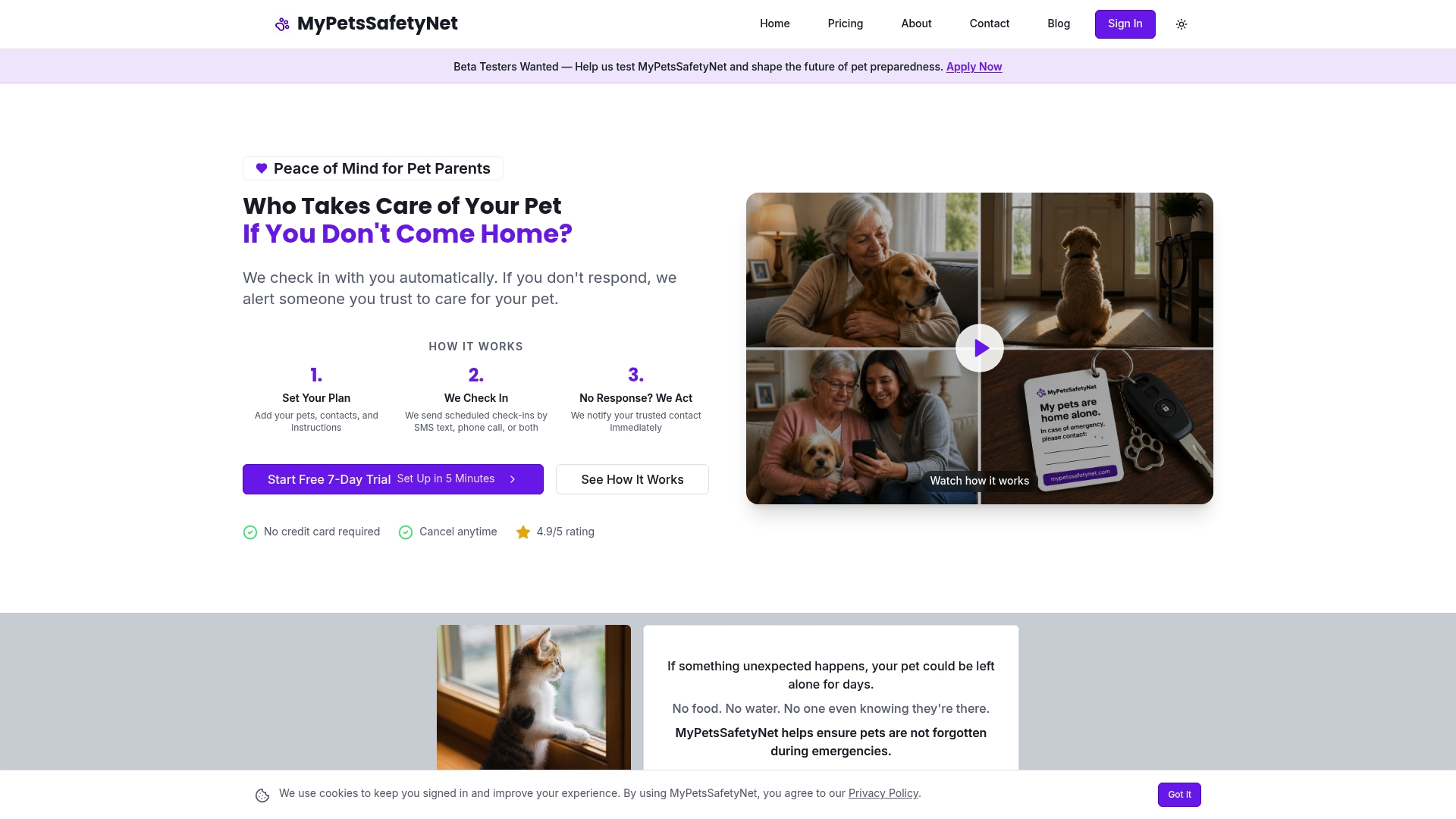
Our wellness check-in service notifies your emergency contacts promptly if you miss a check-in, so they can act on your behalf and your pet’s behalf without delay. You set the contacts, the instructions, and the authorization. We make sure the right people are reached at the right time. For therapy pet owners managing detailed care plans and caregiver networks, that layer of coordination matters. Register with Mypetssafetynet and give your therapy animal the backup plan they deserve.
FAQ
What does a therapy pet care responsibilities guide cover?
A therapy pet care responsibilities guide covers health maintenance, behavioral standards, documentation requirements, emergency planning, and caregiver selection for therapy animals. It addresses both day-to-day care and contingency planning for owner absence.
What are the registration requirements for therapy animals?
Registration requires handler course completion, a team behavioral evaluation, and a veterinarian health screening. Organizations like Pet Partners set these standards to verify both handler and animal readiness.
How do I create an emergency plan for my therapy pet?
An effective emergency plan includes a signed service agreement, named emergency contacts, a written vet spending limit, and a home access map for caregivers. Review and update the plan every six months to keep contacts and authorizations current.
What qualities should a temporary therapy pet caregiver have?
A trusted temporary caregiver must know your animal’s daily routine, stress signals, and medical needs, and must be willing to follow written instructions precisely. In-person training before an emergency is the most reliable way to prepare them.
How often should therapy animals receive veterinary health screenings?
Therapy animals should receive wellness exams at least annually, with additional screenings as required by registration organizations or facility access policies. Up-to-date vaccination records and health logs are frequently mandatory for continued facility access.