What Is a Pet Care App? Your Complete 2026 Guide

A pet care app is a mobile application designed to centralize your pet’s health management, including vet appointment scheduling, medical record storage, activity tracking, and emergency information access. The global pet care app market is projected to grow from $3.23 billion in 2025 to $6 billion by 2033, reflecting how seriously pet owners now take digital health tools. About 25% of pet owners had integrated pet health apps into their routines by 2023. That number is rising fast, and for good reason. Whether you have one dog or a household full of animals, a pet management app puts every critical detail in one place, ready when you need it most.
What are the core features of a pet care app?
A pet care app typically covers six functional areas that together replace a scattered mix of paper records, calendar reminders, and memory.
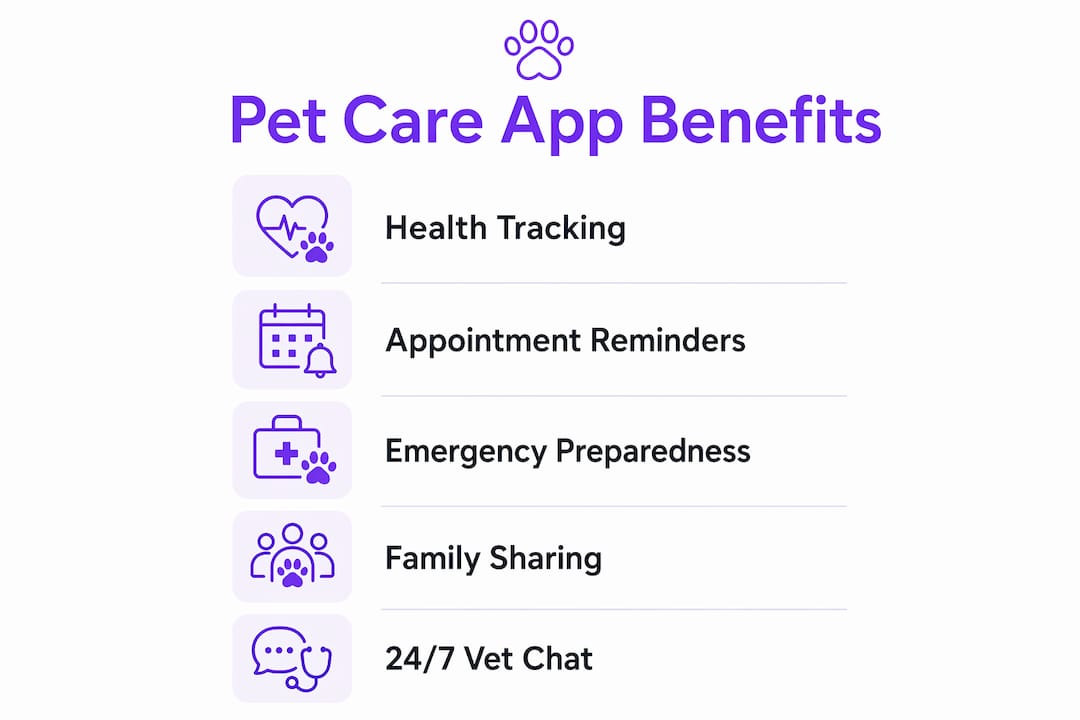
- Appointment scheduling and reminders. You set vet visits, grooming sessions, and medication times. The app sends alerts so nothing slips through.
- Medical record storage. Vaccination certificates, lab results, and prescription histories live in one secure location. You can share them with any vet at any time.
- Health tracking. You log your pet’s weight, diet, activity levels, and symptoms over time. This creates a running health picture rather than isolated snapshots.
- Medical ID and emergency information. A dedicated profile stores your pet’s allergies, conditions, and emergency contacts. First responders or caregivers can access this instantly.
- AI-assisted symptom checking. Many apps let you describe symptoms and receive triage guidance. Veterinarians confirm that symptom checker apps are triage tools, not diagnostic devices, but they improve vet-owner communication by organizing clinical data before appointments.
- Family sharing and caregiver coordination. You can grant access to a partner, dog walker, or family member. Each person sees the same records and reminders, reducing confusion.
Pro Tip: Set up your pet’s Medical ID profile before you ever need it. If you’re in an accident or a medical emergency, a caregiver can access your pet’s full health profile without having to search for paperwork.
Premium subscriptions for apps with 24/7 certified vet chat and AI health tracking typically cost between $9.99 per month and $99.99 per year. That range covers most pet owners, from those who want basic reminders to those who want round-the-clock veterinary access.

What are the main benefits of using a pet care app?
The primary value of a pet care app is proactive health monitoring. Pets instinctively hide pain and illness, which means symptoms often go unnoticed until a condition becomes serious. An app that tracks behavior, appetite, and activity over weeks gives you the data to spot changes early.
“The primary value of pet care apps lies in proactive health monitoring to catch otherwise hidden signs of pain or illness in pets. Effective apps facilitate better communication between owners and vets by compiling and organizing clinical history into shareable formats.” — Pawrpose.org and veterinary researchers
The benefits extend well beyond early detection:
- Better vet communication. Multi-week health reports generated by apps help vets diagnose faster than relying on verbal owner accounts alone. Bringing a logged symptom timeline to an appointment is far more useful than saying “he seemed off last week.”
- Routine consistency. Missed medications and forgotten appointments are common problems for busy pet owners. Automated reminders close that gap reliably.
- Emergency readiness. A complete Medical ID means any vet, emergency clinic, or caregiver can treat your pet correctly, even if you’re not there to explain the history.
- Peace of mind. Knowing your pet’s records are organized and accessible reduces the anxiety that comes with unexpected health events.
- Long-term health trends. Longitudinal data reveals patterns, like seasonal allergy flare-ups or gradual weight changes, that a single vet visit would never catch.
For pet owners managing their own health challenges, these benefits carry extra weight. A practical guide to pet ownership during chronic illness explains how digital tools help owners maintain consistent care even when their own capacity fluctuates.
How do pet care apps integrate with technology and support emergency preparedness?
Modern pet care apps connect with a wider ecosystem of devices and services. That integration is what separates a basic reminder app from a genuine health management platform.
- Smart collar and GPS tracker integration. Many apps sync with wearable devices that monitor heart rate, sleep, and location. You receive real-time alerts if your pet leaves a designated area or shows unusual activity patterns.
- AI symptom analysis. You describe what you’re observing, and the app cross-references symptoms against veterinary databases to suggest urgency levels. This helps you decide whether to call your vet today or head to an emergency clinic tonight.
- Medical ID for emergency access. A well-configured Medical ID stores your pet’s name, breed, age, known conditions, current medications, and your emergency contacts. Any vet or caregiver who encounters your pet can pull this up immediately.
- Role-based caregiver access. Experienced users know that apps work best when equipped with Medical ID and shared access, enabling emergency use and caregiving collaboration. You can assign a dog walker read-only access while a family member has full editing rights.
- Automated alerts and check-ins. Some platforms send notifications if a scheduled medication log goes unrecorded, prompting a caregiver to follow up.
Pro Tip: If you live alone with pets, look for an app that supports emergency contact notifications. Services like Mypetssafetynet are built specifically for this scenario, alerting your contacts if something happens to you so your pets are never left without care.
Emergency preparedness is where technology and compassion intersect. An app that holds your pet’s full profile, shares it with trusted people, and sends alerts when something is wrong is not a luxury. For solo pet owners, it’s a practical safety net.
How to choose the best pet care app for your needs
Choosing the right app comes down to matching features to your specific situation. A single dog owner with a healthy pet needs different tools than a multi-pet household managing chronic conditions.
| Evaluation criteria | What to look for |
|---|---|
| Usability | Clean interface you’ll actually open daily, not just during emergencies |
| Feature set | Covers your pet’s specific needs: medication tracking, GPS, vet chat, or all three |
| Family sharing | Role-based access so multiple caregivers stay coordinated without overwriting each other’s entries |
| Pricing | Free tiers for basic logging; premium tiers ($9.99/month or up to $99.99/year) for vet chat and AI features |
| Data privacy | Clear policy on who owns your pet’s health data and how it’s stored |
| AI and vet support | 24/7 vet chat is worth the cost if you have a young pet, a senior animal, or a breed with known health risks |
Feature-heavy apps often require high maintenance. The best apps offer family sharing with role-based access to prevent missed medication doses. That finding points to a practical rule: choose the app with the features you’ll actually use consistently, not the one with the longest feature list.
Start by listing your three most common pet care challenges. If you forget medications, prioritize reminder systems. If you travel frequently, prioritize GPS integration and caregiver sharing. If your pet has a complex medical history, prioritize record storage and vet communication tools. For a broader look at how these tools fit into a coordinated care network, the pet care network best practices guide covers how to build a reliable support system around your pet.
Key Takeaways
A pet care app delivers the most value when it combines proactive health monitoring, organized medical records, and shared emergency access into one platform your whole care network can use.
| Point | Details |
|---|---|
| Core definition | A pet care app centralizes health records, reminders, tracking, and emergency info in one place. |
| Market growth | The market is projected to reach $6 billion by 2033, reflecting rapid adoption among pet owners. |
| Emergency readiness | Medical ID and caregiver sharing are the features that matter most when an emergency happens. |
| Choosing wisely | Match features to your actual needs; a simpler app used consistently beats a complex one ignored. |
| Apps supplement vets | Symptom checkers and health logs improve vet communication but do not replace professional diagnosis. |
What Mypetssafetynet has learned about pet care apps
The most common mistake pet owners make with these apps is treating them as a daily diary instead of a longitudinal health record. Logging your dog’s walk today is useful. Having 18 months of weight, appetite, and activity data when your vet asks “has anything changed recently?” is genuinely powerful. Longitudinal data helps vets diagnose faster than verbal owner accounts alone. That’s not a small advantage.
The second mistake is overreliance. Veterinarians are clear that symptom checker tools are triage aids, not replacements for clinical examination. An app that tells you a symptom is “low urgency” does not mean your vet agrees. Use the app to organize your observations and communicate them clearly. Let the vet make the call.
The feature most pet owners overlook is caregiver collaboration. Role-based access reduces missed care opportunities and improves consistency across everyone involved in your pet’s life. If you live alone, this feature is not optional. It’s the difference between your pet being cared for and your pet being left waiting.
Apps complement veterinary care. They do not replace it. The pet owners who get the most from these tools are the ones who use them to show up to vet appointments better prepared, not the ones who use them to avoid going.
— Mypetssafetynet
Mypetssafetynet: a wellness check-in built for pet owners who live alone
Pet care apps manage your pet’s health records and routines. Mypetssafetynet addresses the question those apps don’t answer: what happens to your pets if something happens to you?
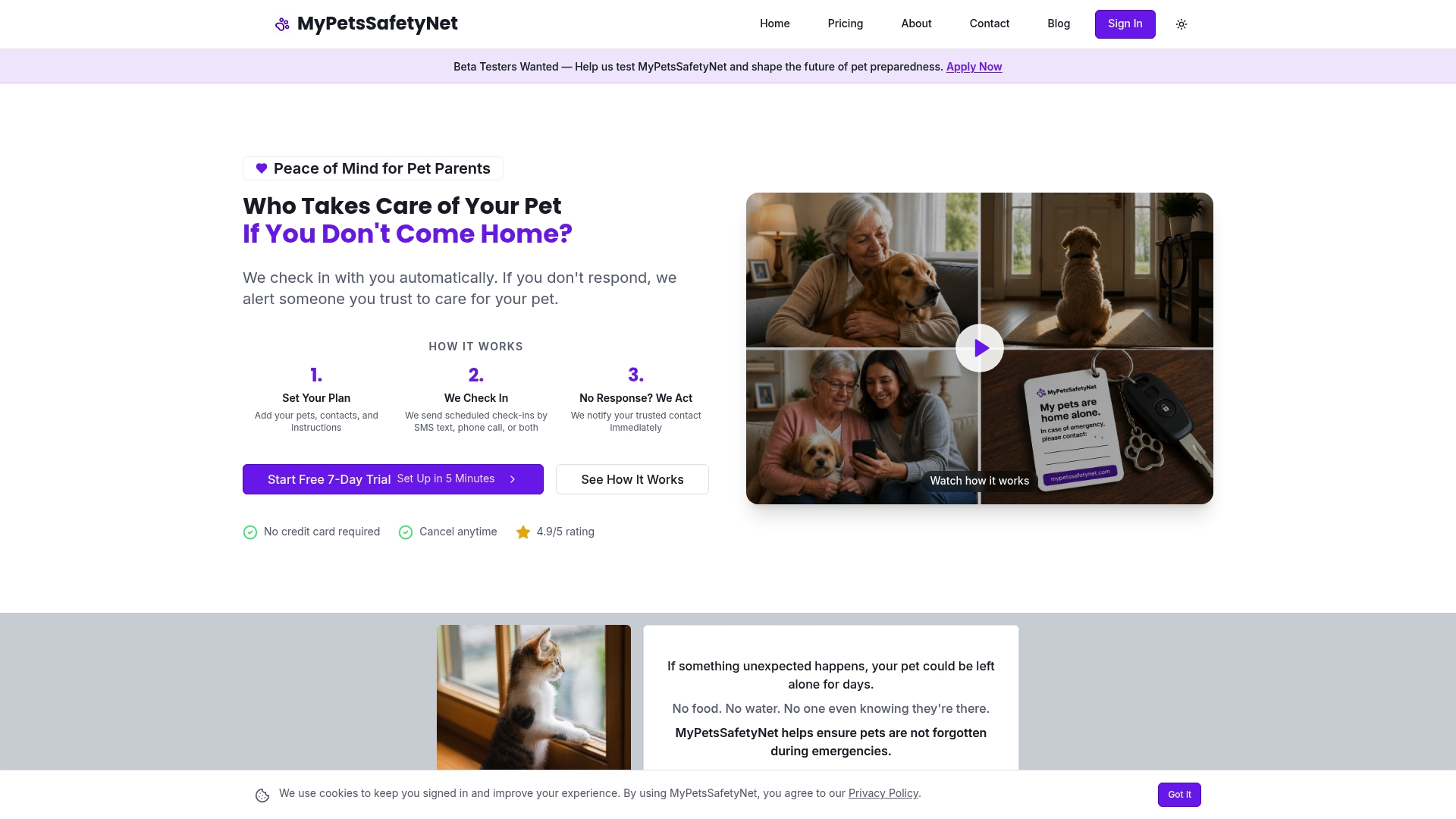
Mypetssafetynet is a wellness check-in service designed for solo pet owners, people managing health conditions, and anyone who wants the assurance that their pets will never be left without care. If you miss a check-in, your designated emergency contacts are notified promptly so they can reach you and look after your animals. It works alongside any pet care app you already use, adding the human safety layer that technology alone can’t provide. Visit Mypetssafetynet to see how the service works and set up your emergency contact plan today.
FAQ
What is a pet care app used for?
A pet care app is used to manage your pet’s health records, schedule vet appointments, track activity and diet, and store emergency information. Many apps also offer AI symptom checking and caregiver sharing features.
Are pet care apps worth the cost?
Premium pet care apps typically cost between $9.99 per month and $99.99 per year and include 24/7 vet chat and AI health tracking. For pet owners with young animals, senior pets, or complex medical histories, that cost is well justified.
How do pet care apps help in emergencies?
A Medical ID profile within the app stores your pet’s conditions, medications, and emergency contacts in one place. Any vet or caregiver can access this information immediately, even if you’re not available.
Can multiple caregivers use the same pet care app?
Most quality pet care apps support family sharing with role-based access, meaning a dog walker, partner, or family member can each have appropriate access without overwriting each other’s records.
Do pet care apps replace veterinary visits?
Pet care apps do not replace veterinary visits. Veterinarians confirm that symptom checkers are triage tools that improve communication, but clinical diagnosis requires a professional examination.