What Is a Pet Welfare Safety Net? A Clear Guide

A pet welfare safety net is a coordinated set of community programs designed to keep pets safe and with their owners during times of crisis or financial hardship. These programs provide emergency foster care, subsidized veterinary services, pet food assistance, and housing support. Organizations like the ASPCA and services like Mypetssafetynet recognize that most pet surrenders are preventable when the right support reaches owners at the right time.
What is a pet welfare safety net and what does it include?
A pet welfare safety net is defined as a community-based support system that provides veterinary care, pet food, and temporary foster housing to prevent pet surrenders during hardship. The term “safety net” is borrowed from social services language, where it describes programs that catch people before they fall through the cracks. In animal welfare, it means the same thing: catching pets and their owners before a crisis forces permanent separation.
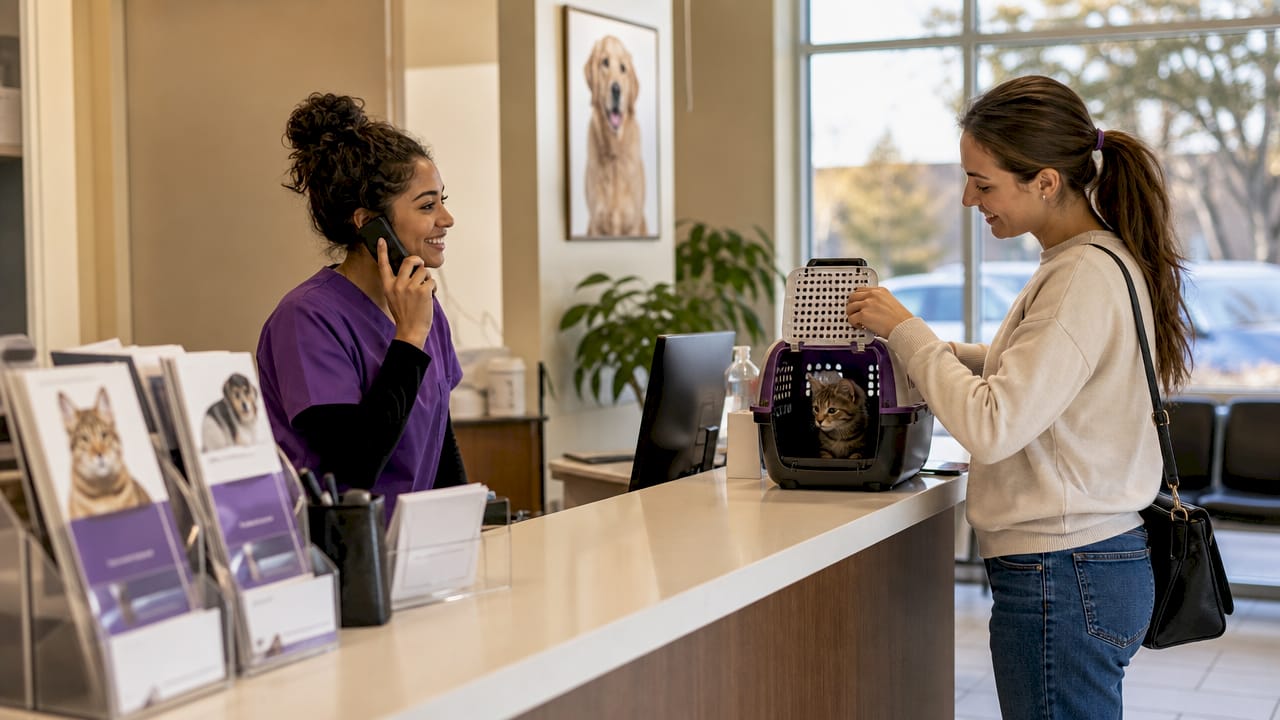
These programs address the most common reasons owners give up their pets: cost of veterinary care, loss of housing, and inability to afford food or supplies. A pet safety net does not wait for surrender to happen. It intervenes early, building trust with owners so they reach out for help before the situation becomes irreversible.
The core components of a pet welfare safety net include:
- Emergency foster care: Trained volunteers temporarily house pets while owners resolve a crisis such as hospitalization, eviction, or domestic violence situations.
- Subsidized veterinary care: Programs like SafetyNet PetAssist have provided over $68,000 in subsidized care to vulnerable pet owners, covering treatments that would otherwise force economic euthanasia.
- 24/7 veterinary telehealth: Remote consultations address physical and logistical barriers for owners who cannot travel to a clinic.
- Pet food pantries and supply donations: Regular access to food, flea treatments, and basic supplies removes the financial pressure that leads to surrender.
- Behavioral support and training: Owners who struggle with a pet’s behavior are far more likely to surrender without guidance. Training resources keep the bond intact.
- Pet-friendly housing assistance: Advocates help owners find rentals that accept pets, removing one of the most common barriers to keeping animals.
Pro Tip: If you’re a solo pet owner facing a health concern, register with a local foster program before an emergency happens. Having your pet’s care plan in place ahead of time removes the pressure of making decisions during a crisis.
How do pet welfare safety net programs work?
Access to a pet welfare network follows a clear process, though the specifics vary by organization. Most programs begin with an initial intake conversation designed to understand the owner’s situation without judgment. The ASPCA recommends a trauma-informed approach using open-ended questions like “What’s making this hard for you right now?” rather than rigid financial screening. This method identifies real needs more accurately than a checklist ever could.
Common eligibility criteria across most programs include:
- Proof of financial hardship: This may include a pension card, government benefit documentation, or a referral from a social worker or shelter.
- Residency requirements: Many programs serve specific geographic areas, so local registration matters.
- Pet documentation: Vaccination records and identification help programs place pets quickly and safely.
- Temporary nature of the crisis: Programs prioritize owners who have a realistic path back to stability, since the goal is reunification, not permanent rehoming.
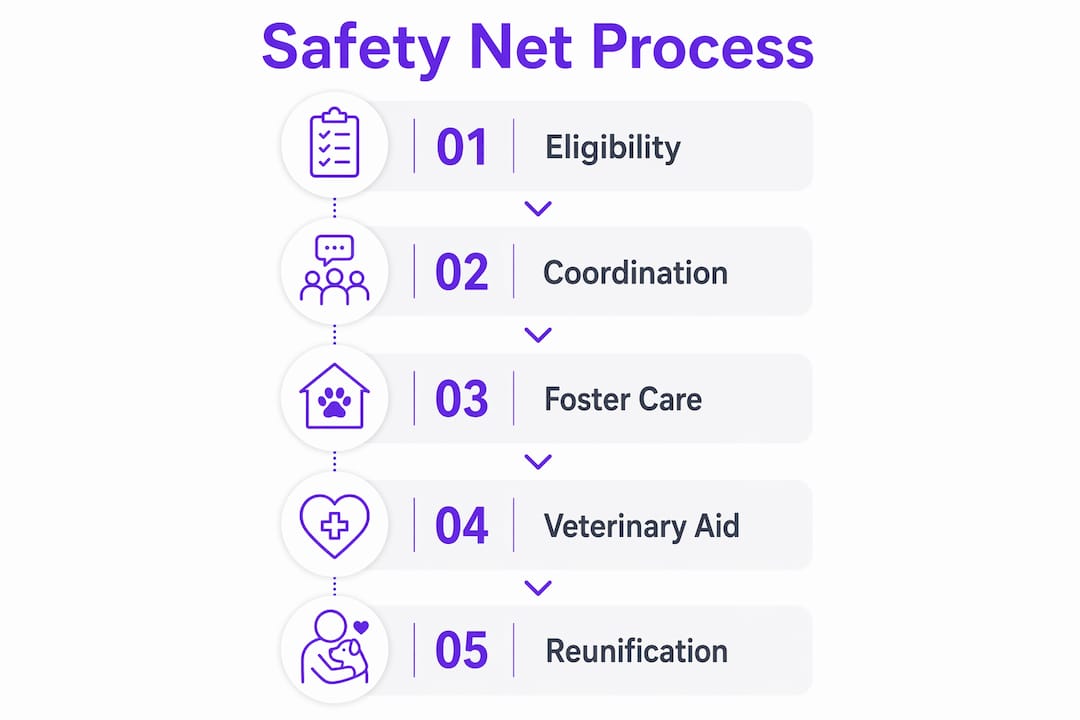
Once eligibility is confirmed, the process typically moves through three stages. First, the owner and program coordinator agree on a temporary care arrangement, whether that is foster placement, food assistance, or veterinary support. Second, the owner receives regular check-ins to track progress toward stability. Third, the program supports reunification or transitions the owner to longer-term community resources.
Pro Tip: Contact your local humane society or animal shelter directly and ask whether they operate a safety net or pet retention program. Many programs are not widely advertised, and a single phone call can open access to significant support.
Operational sustainability matters too. Programs that set clear communication boundaries, such as defined call hours for clients, last longer and serve more owners over time. Volunteer and staff burnout is a real risk in emotionally demanding work, and well-run programs protect their teams as carefully as they protect the pets.
What impact do pet welfare safety nets have on communities?
The outcomes from well-run pet welfare safety net programs are measurable and significant. Temporary foster care lasting 60–90 days produces an 80–86% reunification rate between pets and their owners. Without these programs, research shows that approximately 80% of those owners would lose their pets permanently.
That reunification rate matters beyond the individual family. Every pet that stays with its owner is one fewer animal entering a shelter system that is already stretched thin. Reduced shelter intake lowers animal control costs and reduces the public resources spent on housing, feeding, and rehoming animals.
| Benefit | Impact |
|---|---|
| Reunification rate | 80–86% of pets return to owners after short-term foster care |
| Economic euthanasia prevention | Subsidized care removes cost as a reason to end a pet’s life |
| Shelter intake reduction | Fewer surrenders lower operational costs for local shelters |
| Community stability | Animal welfare safety nets reduce public resource strain and support public health |
| Psychosocial owner benefits | Retaining a pet during hardship reduces isolation and emotional distress |
The psychosocial dimension is often underestimated. Pets provide emotional stability during some of the most difficult periods of a person’s life, including illness, job loss, and housing instability. Removing a pet during those moments compounds the trauma. Safety net programs that keep owners and pets together protect both the animal and the person.
“Safety net programs are proactive interventions to build trust, aiming to keep pets with their owners before animals come to shelters.” — ASPCApro
Animal welfare resources that function as true community infrastructure reduce costs across multiple public systems simultaneously, from animal control to emergency social services.
How can pet owners prepare and use a safety net in emergencies?
Preparation is the most effective form of pet welfare support. Owners who plan ahead face far fewer impossible choices when a crisis arrives. If you live alone or manage a health condition, the question of what happens to your pets during an emergency deserves a real answer before you need it.
Here are the concrete steps to build your own emergency plan:
- Create a pet emergency document. Include your pet’s name, breed, age, medical history, vaccination records, feeding schedule, and veterinarian contact. Store a copy with a trusted friend and one in your home.
- Identify at least two emergency contacts. These are people who can reach your pet within hours if you are incapacitated. Confirm their willingness in advance.
- Register with a local foster or safety net program. Many programs accept pre-registration so that placement happens faster during an actual emergency.
- Know your local pet-friendly housing options. If you rent, identify two or three nearby properties that accept pets in case you face sudden displacement.
- Access telehealth veterinary services. Remote consultations through services like SafetyNet PetAssist overcome transport barriers when getting to a clinic is not possible.
- Connect with a pet food pantry. Many humane societies and community organizations run regular food distribution. Knowing where yours is before you need it removes one decision from a stressful moment.
- Use community behavioral resources. If your pet has behavioral challenges, address them now. Owners who struggle with behavior are more likely to surrender during a crisis.
Senior pet owners face specific planning challenges. A senior pet owner wellness check plan that includes pet care instructions gives family members and caregivers clear guidance without guesswork. Pet owners managing chronic illness benefit from the same approach, as outlined in resources on pet ownership during chronic illness.
Key Takeaways
A pet welfare safety net is the most effective tool available for preventing permanent pet surrender, and proactive registration with local programs is the single most important step any owner can take before a crisis occurs.
| Point | Details |
|---|---|
| Core definition | A pet welfare safety net provides foster care, veterinary aid, and supplies to prevent pet surrender during hardship. |
| Foster care outcomes | Short-term foster placements of 60–90 days produce an 80–86% reunification rate between pets and owners. |
| Access process | Programs use trauma-informed intake, not rigid financial screening, to identify and serve owners in need. |
| Community impact | Safety net programs reduce shelter intake, lower animal control costs, and support public health broadly. |
| Owner preparation | Pre-registering with a local program and creating a pet emergency document are the two highest-impact steps. |
Why pet welfare safety nets deserve more recognition
At Mypetssafetynet, we have seen firsthand what happens when a pet owner faces a sudden emergency with no plan in place. The panic is real. The grief of potential separation from a beloved animal is real. And the tragedy is that most of it is preventable.
What strikes me most about safety net programs is how little awareness exists around them. Owners who would benefit most often do not know these resources exist until they are already in crisis. The stigma around asking for help delays outreach, and by the time some owners call, the situation has already escalated beyond what a short-term foster placement can fix.
The trauma-informed approach championed by organizations like the ASPCA gets this right. Asking “What’s making this hard for you right now?” instead of demanding proof of poverty treats owners with dignity. That dignity is what keeps them engaged with the program long enough for reunification to happen.
The uncomfortable truth is that most communities are underinvesting in these programs. The return on investment is clear: every dollar spent on temporary foster care or subsidized veterinary support saves multiples in shelter costs, animal control resources, and public health expenditure. The data supports expansion. The will to fund it is what lags behind.
My strongest advice to any pet owner reading this: do not wait for a crisis to find your safety net. Build your plan now, identify your contacts, and register with local programs. Your pets cannot advocate for themselves. You can.
— Mypetssafetynet
Mypetssafetynet: planning ahead for your pet’s safety
Mypetssafetynet was built for exactly the situation that safety net programs address: the moment when something happens to you and your pet is left without a caregiver.
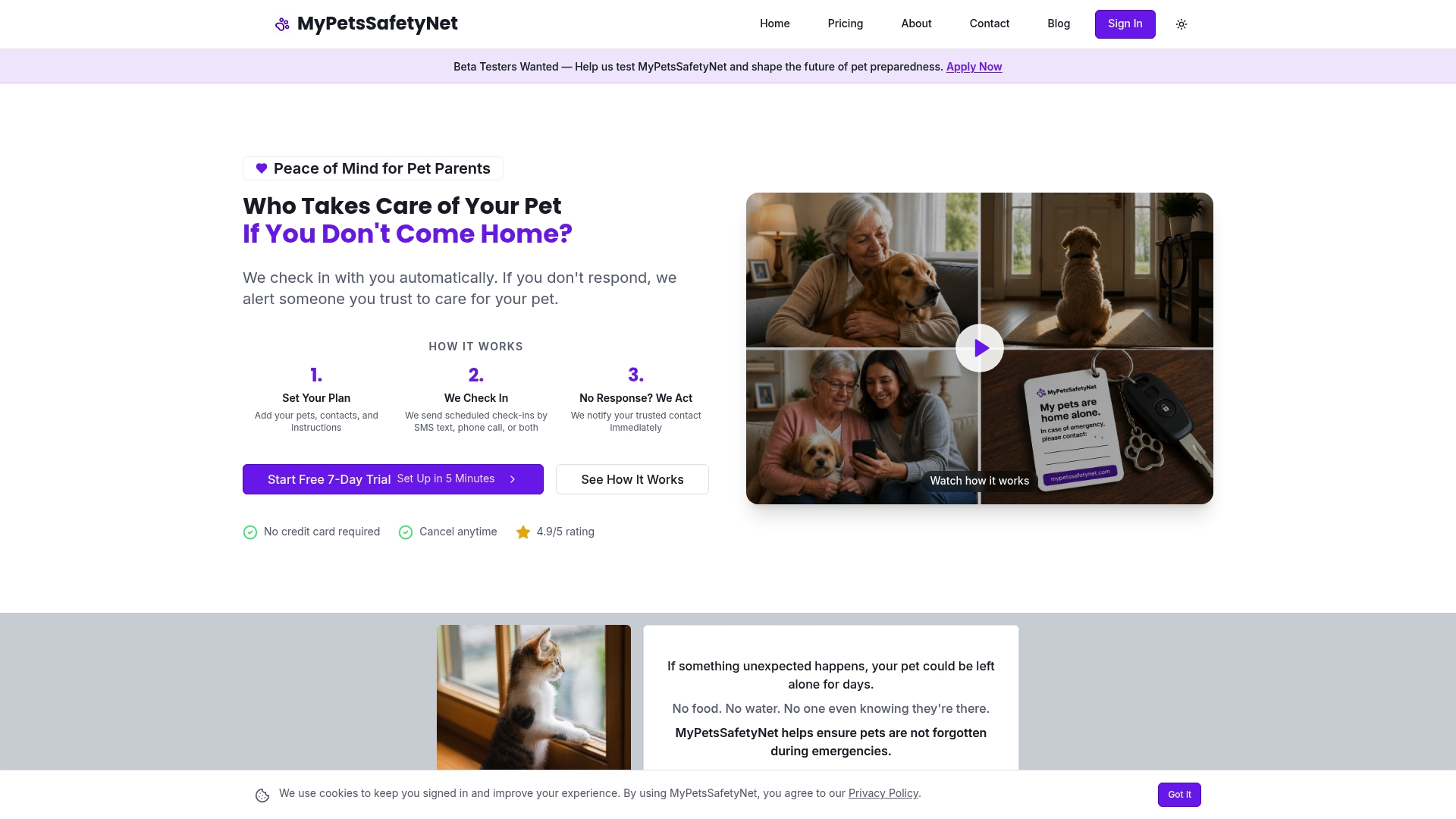
The service works by notifying your designated emergency contacts promptly if you become unreachable, so they can check on both you and your pets without delay. It fills the gap that foster programs and food pantries cannot: the gap between “something is wrong” and “someone knows to help.” Whether you live alone, manage a health condition, or simply want peace of mind, wellness check-in tools from Mypetssafetynet give your pets a reliable backup plan. Visit Mypetssafetynet to set up your emergency contacts and pet care instructions today.
FAQ
What is a pet welfare safety net?
A pet welfare safety net is a community-based system of programs providing emergency foster care, subsidized veterinary services, pet food, and housing support to help owners keep their pets during financial hardship or personal crisis.
How do I set up a welfare check with pets included?
Register with a service like Mypetssafetynet to designate emergency contacts who will be notified if you become unreachable, and include your pet’s care instructions in your emergency document so caregivers know exactly what to do.
What is the reunification rate for pets in foster safety net programs?
Short-term foster placements of 60–90 days produce an 80–86% reunification rate, meaning the vast majority of owners who use these programs get their pets back.
Who qualifies for pet safety net programs?
Most programs require proof of financial hardship, local residency, and basic pet documentation such as vaccination records. Eligibility screening uses a trauma-informed approach rather than rigid financial thresholds.
What is pet support through telehealth veterinary services?
Telehealth veterinary services provide remote consultations for pet owners who cannot access a clinic due to transport, mobility, or geographic barriers, making professional care available regardless of physical limitations.