What Is Responsible Pet Ownership: A Complete Guide

Responsible pet ownership is defined as the lifelong commitment to meet every physical, emotional, legal, and ethical need of an animal in your care. The American Veterinary Medical Association and Alabama Public Health both recognize this commitment as covering nutrition, veterinary care, behavioral training, legal compliance, and emergency preparedness. Getting it right protects your pet, your community, and the human-animal bond that makes pet ownership so rewarding. This guide gives you a clear, practical breakdown of what responsible care actually looks like, from daily feeding to planning for the unexpected.
What is responsible pet ownership and why does it matter?
Responsible pet ownership is the practice of fulfilling every duty your pet depends on you for, across its entire lifetime. It goes well beyond providing food and shelter. The American Veterinary Medical Association frames it as a multifaceted obligation covering physical health, emotional well-being, legal compliance, and ethical treatment. Alabama Public Health adds that owners must also consider public safety and community impact when caring for their animals.
The stakes are real. Pets cannot advocate for themselves, report neglect, or seek help independently. Every gap in your care directly affects their quality of life. Responsible ownership also benefits your neighbors and local community by reducing stray populations, preventing animal-related incidents, and lowering the burden on shelters and animal welfare organizations.

What are the fundamental responsibilities of a responsible pet owner?
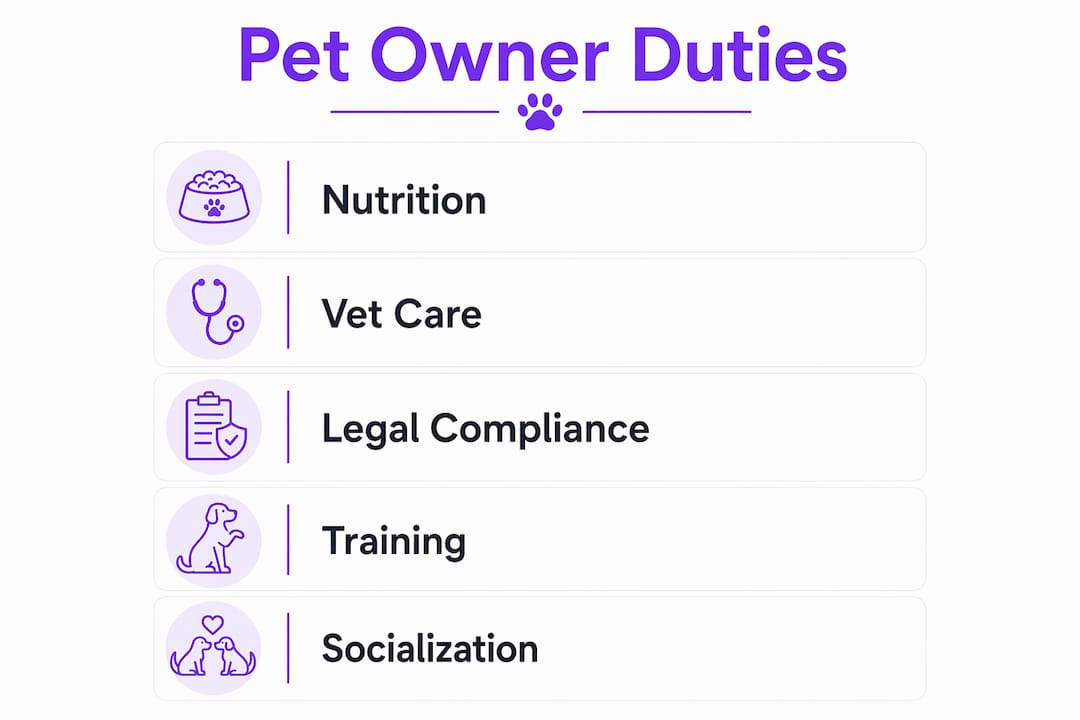
The core duties of a responsible pet owner fall into four categories: nutrition, veterinary care, legal compliance, and ethical treatment. Each one directly affects your pet’s health and safety.
Nutrition and weight management
61% of cats and 59% of dogs in the US are overweight or obese. That statistic means the majority of American pets are being overfed, which leads to diabetes, joint disease, and shortened lifespans. Responsible feeding means providing species-appropriate food in measured portions, not free-feeding from an always-full bowl.
- Feed measured portions based on your pet’s weight, age, and activity level
- Choose food appropriate to the species and life stage (puppy, adult, senior)
- Avoid feeding table scraps, which can cause digestive problems and reinforce begging
- Schedule regular weigh-ins at the vet to catch weight gain early
Veterinary care
Routine veterinary care including core vaccinations and spaying or neutering is non-negotiable for long-term pet health. Spaying females reduces the risk of uterine cancer and eliminates the risk of pyometra. Neutering males reduces prostate issues and certain cancers. Annual wellness exams catch problems before they become expensive emergencies.
- Schedule annual wellness exams and keep vaccinations current
- Spay or neuter your pet to reduce cancer risk and prevent overpopulation
- Establish a relationship with a licensed veterinarian before a health crisis occurs
- Keep a written health record including vaccination dates, medications, and diagnoses
Pro Tip: Routine vet visits cost far less than emergency treatment. A $60 annual exam can catch a dental infection before it becomes a $1,500 surgical procedure.
Legal and ethical duties
Legal compliance protects your pet and your neighbors. Most municipalities require leash use in public spaces, pet registration, and permanent identification such as microchipping. Ethical duties go further, requiring you to provide mental stimulation, social interaction, and a living environment suited to your pet’s species and personality.
How does training and socialization support responsible pet care?
Training and socialization are non-negotiable for all pets. Failure to provide mental stimulation and behavioral guidance drives a significant number of pet surrenders each year. A dog that destroys furniture or a cat that attacks visitors is not a “bad pet.” It is an under-stimulated or poorly socialized one.
Training ensures safety for your pet, your family, and strangers. A dog that reliably responds to “come,” “stay,” and “leave it” is far less likely to cause an accident or bite incident. Socialization, ideally started early in life, reduces fear and aggression by exposing pets to different people, animals, sounds, and environments in a controlled, positive way.
Environmental enrichment matters just as much for cats, rabbits, and birds as it does for dogs. Many pet owners assume low-maintenance pets need little stimulation. That assumption is wrong. Owner involvement is irreplaceable for meeting a pet’s social and emotional needs. No toy or automated feeder replaces direct interaction.
- Use positive reinforcement training methods: reward desired behavior with treats or praise
- Socialize puppies and kittens between 3 and 14 weeks of age for the best results
- Rotate toys and introduce puzzle feeders to keep pets mentally engaged
- Match your pet’s breed or species needs to your actual lifestyle before adopting
Pro Tip: Research your breed’s energy level and working instincts before you adopt. A Border Collie in a studio apartment without daily mental challenges will find its own entertainment, and you won’t like the results.
What planning and preparedness steps protect your pet long-term?
Responsible ownership includes advance planning for travel, emergencies, and life changes. Most pet owners focus on daily care and overlook what happens if they are suddenly unavailable. That gap is where pets suffer most.
Follow these steps to build a solid preparedness plan:
- Designate an emergency caregiver. Choose a trusted person who knows your pet, has a key to your home, and agrees in writing to step in if you are hospitalized or incapacitated. Review what happens to your pets if you’re suddenly hospitalized so you understand the real risks.
- Create a pet emergency kit. Include three to five days of food, water, medications, vaccination records, and a recent photo of your pet. Store it in an accessible location your emergency caregiver knows about.
- Build a pet care network. Identify at least two people who can provide backup care. A pet care network reduces the chance that your pet is left alone during a crisis.
- Budget for senior and chronic care. Senior and chronic illness care significantly increases veterinary costs. Set aside a dedicated emergency fund separate from your routine pet budget.
- Update your documents annually. Review your emergency caregiver designations, your pet’s health records, and your financial plan every year.
Animal neglect often arises unintentionally from a lack of knowledge rather than malice. Owners who consult a veterinarian before acquiring a pet and plan for long-term costs are far less likely to surrender their animals. Preparation is the most direct form of care you can offer.
Pro Tip: Write a one-page “pet care instruction sheet” and give it to your emergency caregiver. Include feeding schedules, medication doses, your vet’s contact information, and any behavioral quirks. Update it every six months.
What legal and community responsibilities do pet owners have?
Legal compliance is a core part of responsible pet care, not an optional add-on. Most American cities and counties have ordinances covering leash laws, licensing, waste removal, and noise control. Violating these rules can result in fines, and more seriously, can put your pet and others at risk.
Local laws mandate leash use and permanent identification such as microchips for dogs and cats in many jurisdictions. Microchipping is a one-time procedure that dramatically increases the chance of reuniting with a lost pet. Registration tags can fall off. Microchips do not.
- License your pet with your local municipality and keep registration current
- Use a microchip and keep your contact information updated in the national registry
- Follow leash laws in all public spaces, including parks and trails
- Clean up waste immediately to protect public health and maintain community goodwill
- Spay or neuter your pet to reduce the strain on local shelters and reduce stray populations
| Legal responsibility | Why it matters |
|---|---|
| Microchipping and registration | Increases recovery rate for lost pets and satisfies local ID laws |
| Leash compliance | Prevents bites, accidents, and conflicts with other animals |
| Waste removal | Protects public health and maintains positive community relations |
| Spay and neuter | Reduces overpopulation and lowers shelter intake rates |
| Noise and nuisance control | Prevents neighbor complaints and potential animal control involvement |
Responsible ownership also means being honest about your pet’s behavior in public. If your dog is reactive around other dogs, keep a safe distance on walks. If your cat goes outdoors, a collar with a bell protects local wildlife. These small choices add up to a safer, more respectful community for everyone.
Key Takeaways
Responsible pet ownership requires consistent action across nutrition, veterinary care, training, legal compliance, and emergency planning to protect both your pet and your community.
| Point | Details |
|---|---|
| Nutrition and weight control | Measure portions and choose species-appropriate food to prevent obesity-related disease. |
| Routine veterinary care | Annual exams and core vaccinations catch problems early and cost far less than emergency treatment. |
| Training and socialization | Consistent training and early socialization prevent behavioral problems and reduce surrender risk. |
| Emergency preparedness | Designate a caregiver, build a pet care network, and budget for senior and unexpected costs. |
| Legal compliance | Microchip, register, and follow leash laws to protect your pet and meet community obligations. |
The part of responsible ownership nobody talks about enough
At Mypetssafetynet, we’ve seen one pattern repeat itself: owners who genuinely love their pets still leave a dangerous gap in their planning. They handle the daily care beautifully. They feed the right food, keep vet appointments, and train consistently. Then something unexpected happens, a hospitalization, a sudden illness, a family emergency, and there is no plan for the pet.
The uncomfortable truth is that most responsible ownership guides focus on what you do every day. Very few address what happens when you can’t do it at all. That gap is where pets end up in shelters, not because their owners stopped caring, but because their owners never planned for being unavailable.
Prospective owners often underestimate the lifelong financial and time commitment involved. A dog adopted at age two may live another 12 to 15 years. That means 12 to 15 years of food, vet bills, grooming, training, and daily care. Senior care costs alone can surprise even experienced owners. Planning for those years before you adopt is not pessimism. It is the most responsible thing you can do.
Responsible ownership is not about perfection. It is about consistency and preparation. The owners who do it best are not the ones with the most money or the most time. They are the ones who planned ahead, built a support network, and made sure their pet would be cared for no matter what.
— Mypetssafetynet
How Mypetssafetynet supports your pet care plan
One of the hardest parts of responsible ownership is knowing your pet is covered if something happens to you.
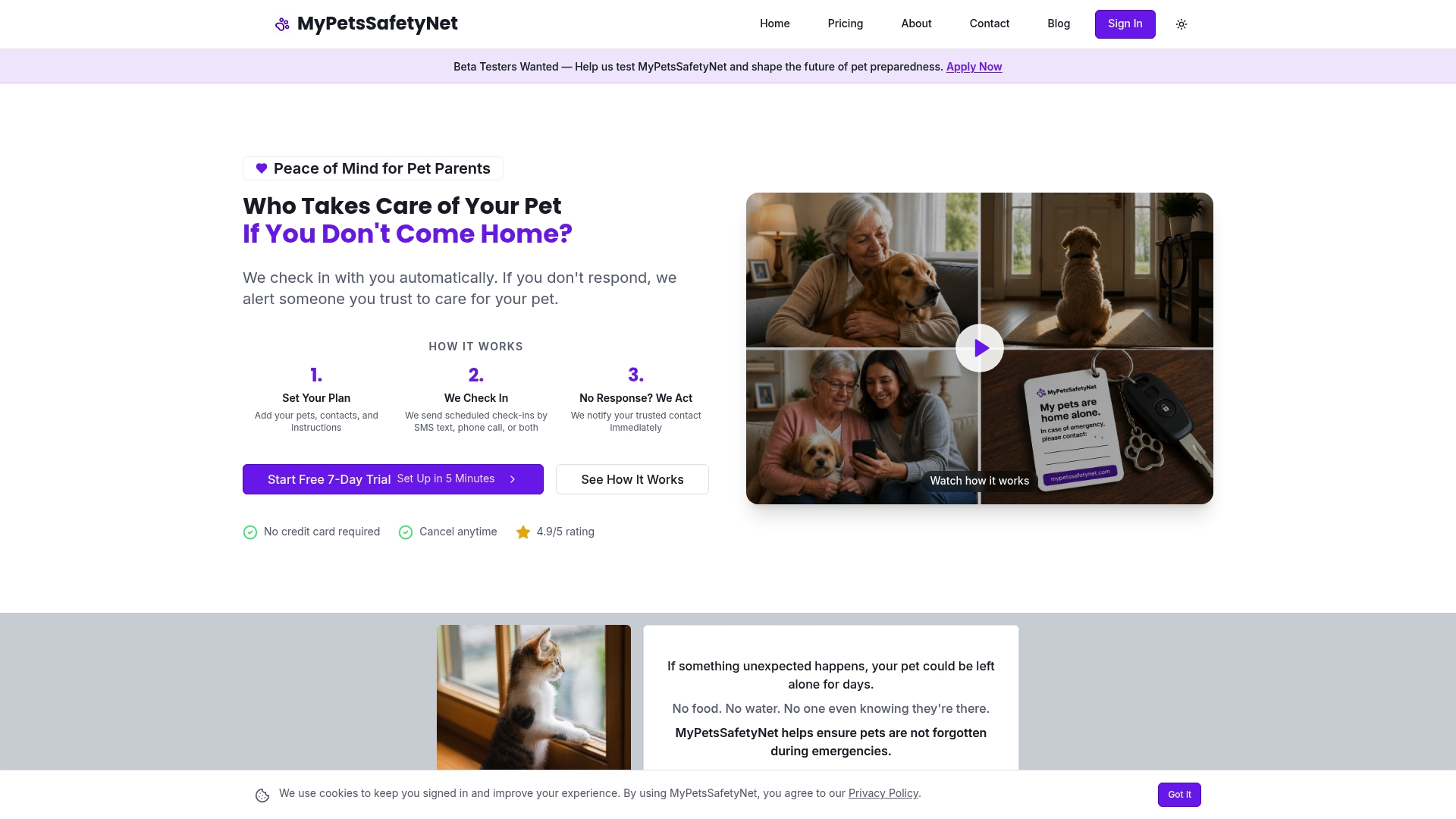
Mypetssafetynet was built specifically for this gap. The service notifies your designated emergency contacts if you become unavailable, so someone checks on both you and your pets promptly. Whether you live alone, manage a chronic health condition, or simply want backup peace of mind, Mypetssafetynet gives you a practical safety net. Visit Mypetssafetynet to set up your wellness check-in and emergency contact plan today. Your pets depend on you. This makes sure they’re never left without care.
FAQ
What is the definition of responsible pet ownership?
Responsible pet ownership is the lifelong commitment to meet a pet’s physical, emotional, legal, and ethical needs. It covers nutrition, veterinary care, training, legal compliance, and emergency preparedness.
How often should a responsible pet owner visit the vet?
Most pets need at least one wellness exam per year. Senior pets and those with chronic conditions typically need visits every six months to monitor health changes.
Why is microchipping considered a legal responsibility?
Many municipalities require microchipping as a form of permanent identification. It increases the chance of recovering a lost pet and satisfies local ordinance requirements where registration tags alone are insufficient.
What happens to pets if their owner is hospitalized unexpectedly?
Without a designated emergency caregiver and a written care plan, pets can be left without food, water, or medical attention for days. Reviewing pet care during hospitalization helps owners prepare before a crisis occurs.
Does responsible pet ownership include financial planning?
Yes. Budgeting for routine care, emergency treatment, and senior care is a core part of pet responsibility. Unexpected veterinary costs are one of the leading reasons owners surrender pets to shelters.