Pet Care Volunteer Program Types: Your 2026 Guide
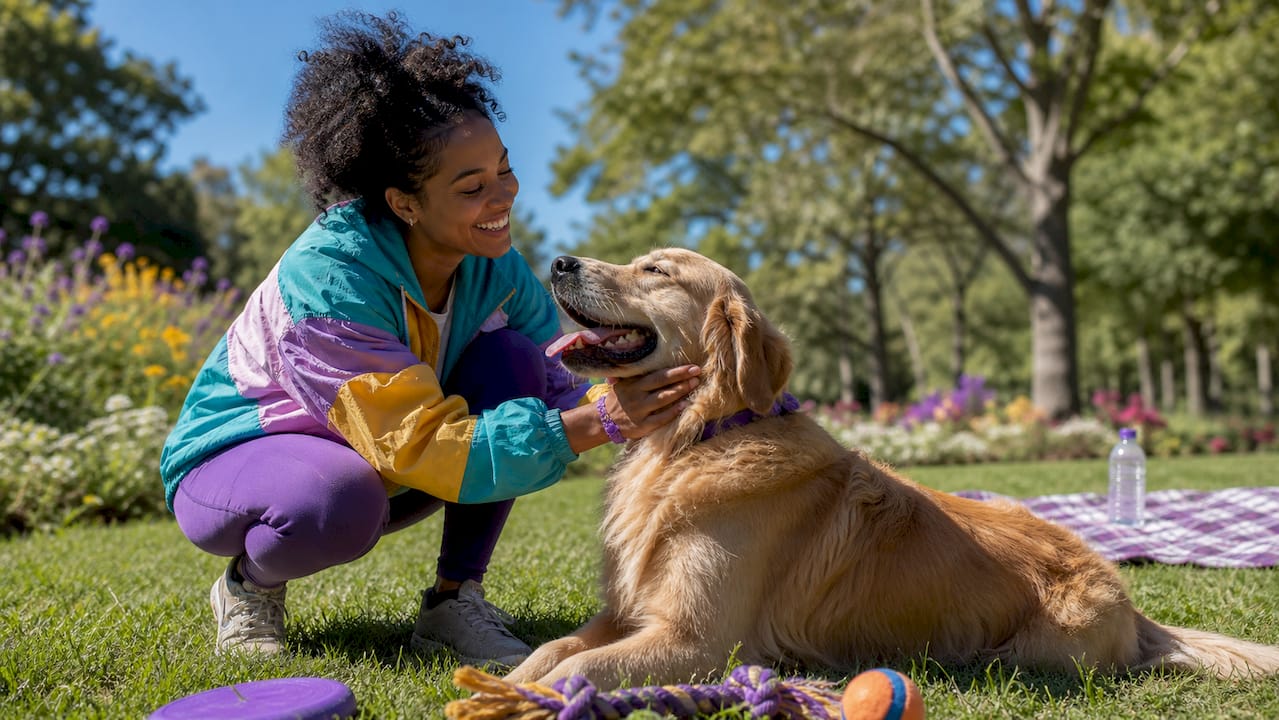
Pet care volunteer programs are defined as structured service opportunities where individuals support animal welfare organizations through direct animal care, operational tasks, or remote contributions. The industry standard term for this field is “animal care volunteering,” which covers everything from dog walking at a local shelter to at-home enrichment crafting. Most major humane organizations, including the San Diego Humane Society and the MSPCA, require volunteers to commit 3–6 months onsite with weekly or bi-weekly shifts of 2–4 hours. That commitment structure exists because consistency directly affects animal behavior and recovery outcomes. Understanding the full range of pet care volunteer program types helps you find the right fit before you apply.
1. Direct animal care volunteer programs
Direct animal care is the most visible category of animal care volunteering. These roles put you face-to-face with dogs, cats, and other shelter animals on a regular schedule. They require formal training, physical readiness, and emotional resilience.
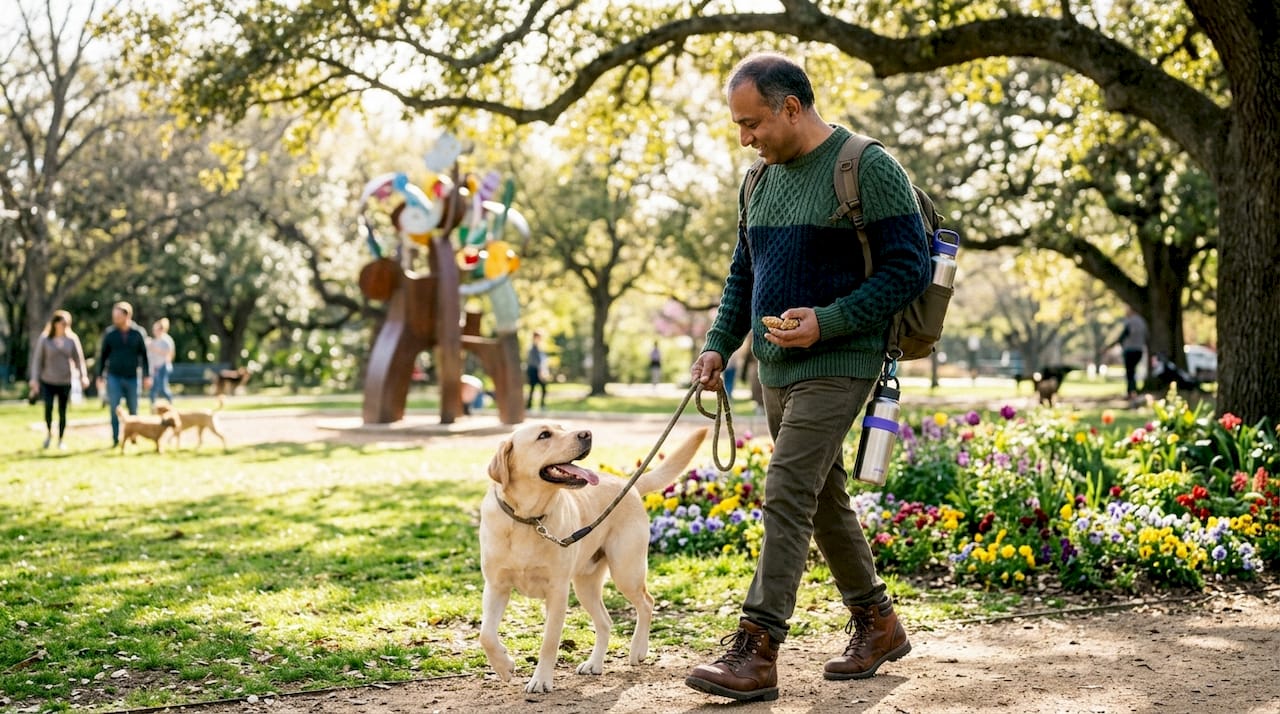
Dog walking and exercise programs are the most requested direct care roles. Volunteers take shelter dogs on leashed walks, run play sessions in outdoor yards, and practice basic commands to improve adoptability. Regular exercise reduces stress behaviors like barking and pacing, which directly increases a dog’s chances of being adopted.
Cat socialization and enrichment programs focus on human interaction for cats housed in kennels. Volunteers sit with cats, use wand toys, and provide gentle handling to reduce fear responses. Cats that receive consistent socialization adapt faster to new homes after adoption.
Foster care is the most impactful role for alleviating shelter overcrowding. Fostering supports recovery and behavioral development while offering flexible commitment for volunteers who cannot do on-site shifts. A foster volunteer takes an animal into their home temporarily, providing a low-stress environment that a shelter simply cannot replicate.
Key responsibilities across direct care roles include:
- Completing a formal orientation and animal handling training before your first shift
- Learning to read animal body language to prevent bites or injuries
- Following facility protocols for feeding, medication reminders, and incident reporting
- Maintaining detailed logs of each animal’s behavior and health observations
Most shelters require new volunteers to complete non-handling shifts first, typically five shifts over two months, before advancing to dog walking or cat socialization. This leveling system protects both volunteers and animals.
Pro Tip: Start your first few shifts focused entirely on observation. Watch how experienced volunteers approach nervous animals. That knowledge shortens your learning curve by weeks.
2. Operational and support volunteer roles
Operational support roles keep shelters functioning every single day. These positions involve less direct animal contact but carry just as much impact on animal health and welfare. Operational roles such as housekeeping and community outreach are high-need with a lower application rate than direct animal care roles. That means you face less competition and can often start sooner.
Support roles fall into several clear categories:
- Housekeeping, laundry, and cleaning: Washing kennel bedding, sanitizing food bowls, and mopping floors are critical for animal health and require the fastest onboarding of any volunteer role.
- Administrative support: Data entry, appointment scheduling for spay/neuter clinics, and donor thank-you communications keep the organization running behind the scenes.
- Event coordination: Volunteers help staff adoption fairs, fundraising walks, and community education booths. These events directly drive adoption rates and donor revenue.
- Photography and social media: High-quality photos and short videos of shelter animals dramatically increase online adoption inquiries. Volunteers with a smartphone and a good eye fill a genuine gap at most shelters.
Pro Tip: If you want to volunteer but have no prior animal handling experience, apply for a housekeeping or laundry role first. You’ll be welcomed immediately, and you’ll learn the shelter’s culture from the inside before pursuing hands-on animal roles.
The volunteer infrastructure at large shelters differs significantly from smaller or rural organizations. Large shelters often have defined role categories with separate application tracks. Smaller shelters rely on flexible volunteers who can shift between tasks as needed.
3. Flexible and remote pet care volunteer programs
Remote and at-home programs are the fastest-growing category of pet care volunteer opportunities. They suit students, working adults, and anyone with limited availability who still wants to contribute meaningfully to animal welfare.
At-home programs support students requiring 30 or fewer service hours, and documentation processing typically takes five business days. That timeline matters if you’re working toward a school or community service deadline.
Common at-home volunteer activities include:
- Sewing fleece blankets and fabric toys for kennel enrichment
- Assembling puzzle feeders and foraging tools from donated materials
- Organizing supply donations received through community drives
- Writing adoption profiles or bios for animals listed on shelter websites
- Conducting virtual fundraising outreach through email or social media
These roles suit busy individuals seeking flexible options who want real impact without a fixed weekly schedule. The enrichment items volunteers make at home reduce boredom and anxiety in shelter animals, which improves their behavior during adoption meet-and-greets.
4. Comparison of pet care volunteer program types
Choosing between program types is easier when you can see the key differences side by side.
| Role type | Typical time commitment | Training required | Animal interaction | Best suited for |
|---|---|---|---|---|
| Direct animal care | 2–4 hours per week, 3–6 months | Formal orientation plus leveling shifts | High | Physically active volunteers with flexible weekday schedules |
| Foster care | Variable, home-based | Orientation plus home check | Very high | Volunteers who cannot commit to on-site shifts |
| Operational support | 2–4 hours per week | Minimal to none | Low | First-time volunteers, those with physical limitations |
| At-home/remote | Flexible, project-based | None | None | Students, busy adults, volunteers with under 30 service hours |
Foster care delivers the highest per-animal impact but requires the most personal investment. Operational support roles offer the lowest barrier to entry and the fastest start date. At-home programs provide genuine value with zero scheduling pressure.
5. How to choose the right volunteer program type
Matching yourself to the right role prevents burnout and maximizes your contribution. Volunteer burnout often stems from mismatched expectations, as many volunteers expect constant animal interaction while much of the real work involves cleaning and manual tasks.
Ask yourself these questions before applying:
- How many hours per week can you realistically commit? Direct care roles require consistency. Missing shifts disrupts animal routines and strains shelter staff.
- Are you physically ready for animal handling? Dog walking requires strength and confidence. Cat socialization requires patience and calm body language.
- What is your emotional capacity? Shelters house animals with trauma histories. Volunteers in direct care roles encounter illness, behavioral challenges, and sometimes euthanasia decisions.
- Do you have a specific skill to offer? Photography, grant writing, web design, and social media management are skills shelters need but rarely find in volunteer applicants.
- What is your service hour goal? If you need fewer than 30 hours for a school requirement, an at-home program is the most practical fit.
Volunteers who view their role as supporting the entire animal welfare system, rather than only direct pet interaction, report greater fulfillment and longer tenure. That perspective shift changes everything about how you experience the work.
First-time volunteers benefit most from starting with support roles. You learn the shelter’s systems, build relationships with staff, and demonstrate reliability before requesting animal handling assignments. Shelters notice and reward that approach. You can also explore senior pet owner support services to understand how structured volunteer programs fit into broader pet welfare networks.
Key takeaways
The most effective approach to pet care volunteering is matching your availability, skills, and emotional readiness to the right program type before you apply.
| Point | Details |
|---|---|
| Two core role categories | Direct animal care and operational support each serve critical shelter needs. |
| Commitment expectations | Most organizations require a 3–6 month commitment with 2–4 hours per week. |
| Foster care impact | Fostering is the highest-impact role for animals and suits volunteers without fixed schedules. |
| Support roles start faster | Housekeeping and admin roles have minimal training requirements and immediate openings. |
| At-home programs fit tight schedules | Remote options like sewing and supply organizing count toward service hours with no on-site requirement. |
What the “glamour gap” in volunteering actually costs animals
Most people picture themselves walking a golden retriever on a sunny morning when they think about volunteering at a shelter. That image is real, but it represents maybe 20% of what shelters actually need. The other 80% is laundry, data entry, kennel cleaning, and supply sorting. Nobody posts photos of that work, which is exactly why shelters are always short-staffed in those areas.
At Mypetssafetynet, we see this pattern clearly. The volunteers who last the longest and feel the most satisfied are the ones who walked in without an agenda. They took the housekeeping shift, learned the animals’ names through the kennel window, and built trust with staff over weeks. By the time they moved into dog walking, they understood the whole system. That context made them better at every task.
The uncomfortable truth is that choosing a volunteer role based on what sounds rewarding often leads to disappointment. Choosing based on what the shelter actually needs leads to impact. If you genuinely want to help animals, start where the gap is biggest. The animals benefit either way, and so do you.
Fostering often suits volunteers who cannot provide rigid on-site schedules but still want significant impact on animal well-being. If you live alone or have health concerns that make on-site work difficult, fostering or at-home programs are not lesser options. They are the right options for your situation.
— Mypetssafetynet
Mypetssafetynet supports pet owners and volunteers alike
Pet care volunteering and responsible pet ownership share the same foundation: making sure animals are never left without care. Mypetssafetynet was built for exactly that purpose. If you’re a solo pet parent or someone who volunteers because you understand how much pets depend on their people, our wellness check-in service gives you and your emergency contacts a reliable safety net.
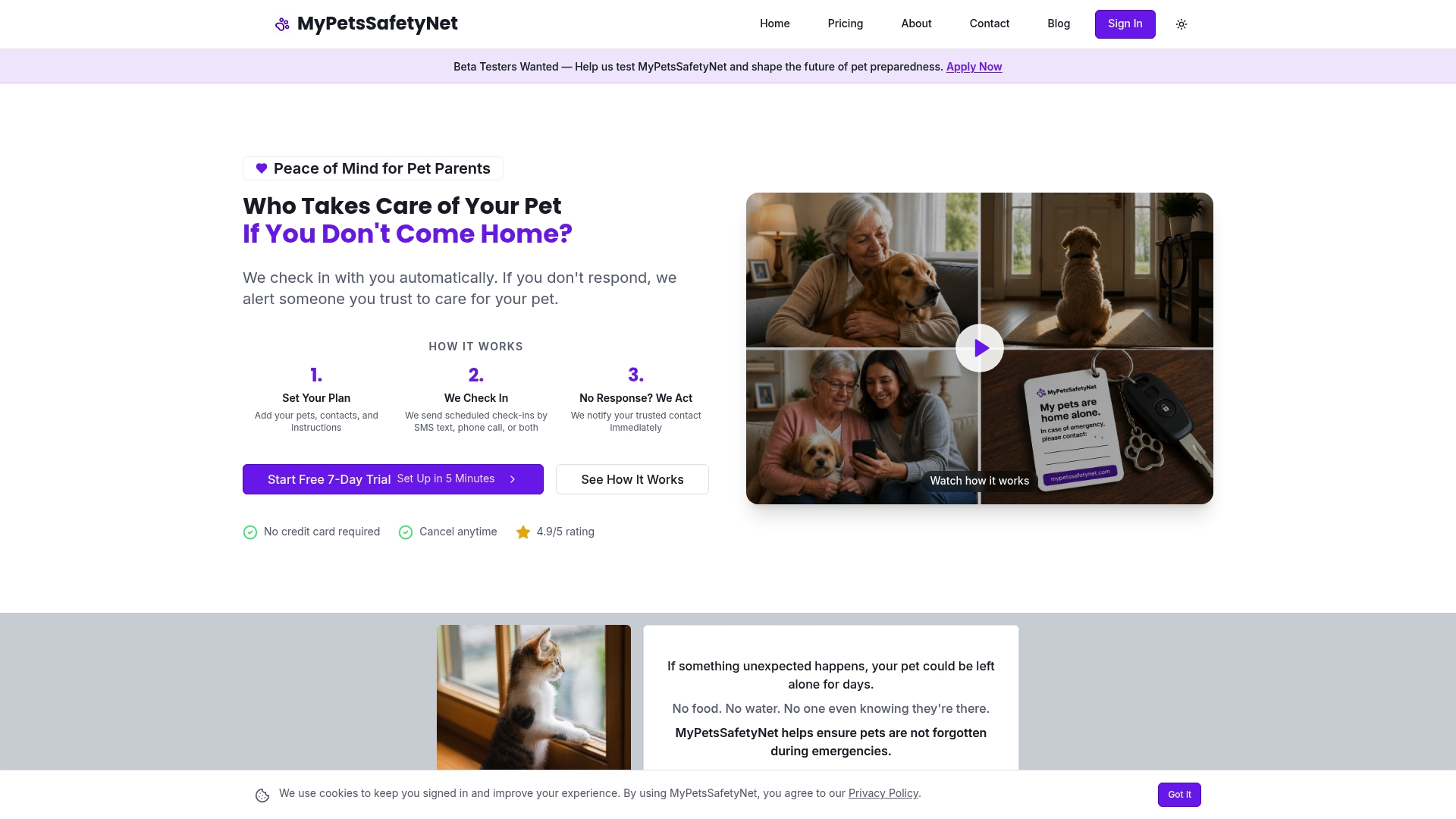
When something happens to you unexpectedly, Mypetssafetynet notifies your emergency contacts so they can check on both you and your pets. It’s a practical layer of protection that complements everything you do as a volunteer or pet owner. Visit Mypetssafetynet to set up your wellness check-in and make sure your pets are always covered.
FAQ
What are the main pet care volunteer program types?
Pet care volunteer programs fall into four main types: direct animal care, operational support, foster care, and at-home or remote programs. Each type varies by time commitment, training required, and level of animal interaction.
How much time do animal shelter volunteer programs typically require?
Most animal welfare organizations require a commitment of 3–6 months with weekly or bi-weekly shifts of 2–4 hours. Consistent attendance matters because animals develop behavioral patterns based on regular volunteer contact.
Can I volunteer for pet care if I have a busy schedule?
At-home programs are designed for volunteers with limited availability and support service hour requirements of 30 hours or fewer. Tasks like sewing enrichment items or writing adoption profiles can be completed on your own schedule.
Do I need experience to start volunteering at an animal shelter?
No prior experience is required for operational support roles like housekeeping, laundry, or administrative tasks. Shelters provide formal orientation and training before any volunteer handles animals directly.
What is the most impactful volunteer role in pet care?
Foster care is the most impactful single role because it removes animals from high-stress shelter environments and supports behavioral recovery in a home setting. It also suits volunteers who cannot commit to fixed on-site shifts.