Pet Owner Accountability Systems Explained for U.S. Owners

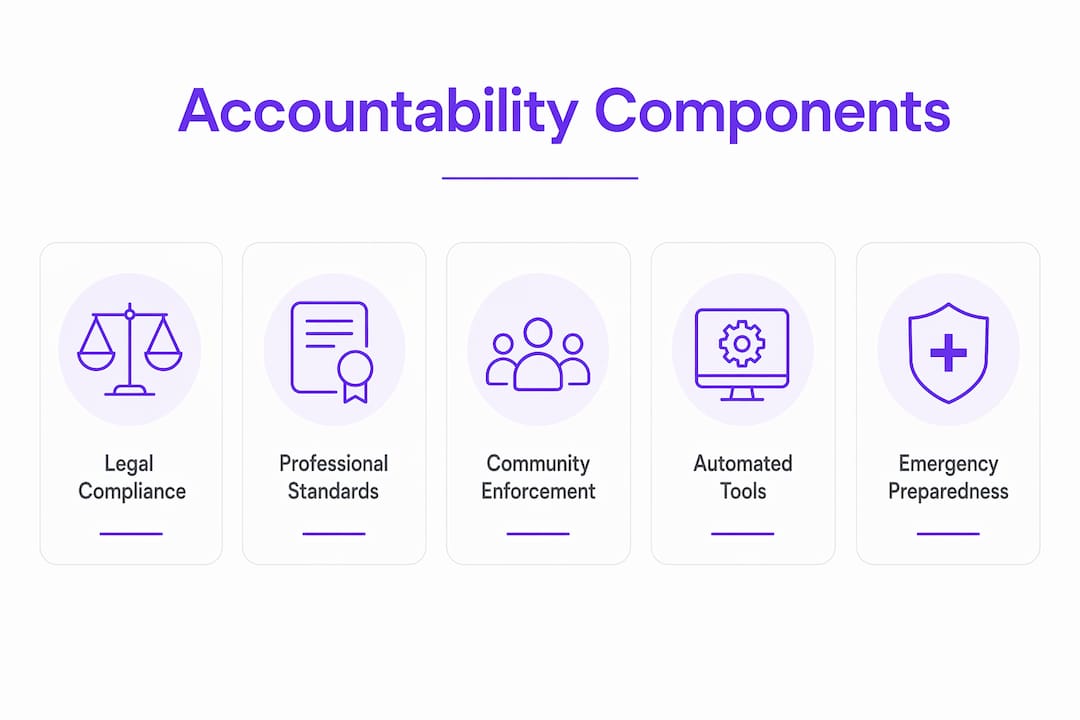
Pet owner accountability systems are structured frameworks that define, track, and enforce the responsibilities every pet owner carries. They exist at every level: local ordinances requiring licensing and leash compliance, responsible pet ownership standards set by the AVMA and MSPCA, professional codes of conduct for pet sitters and dog walkers, and technology tools that monitor care in real time. These systems work together to protect pets, reduce community friction, and give owners a clear picture of what good care actually looks like.
Here’s what these systems cover in practice:
- Legal obligations: licensing, microchipping, vaccination, leash laws, and waste disposal
- Ethical standards: consistent nutrition, veterinary care, mental stimulation, and lifelong commitment
- Community enforcement: DNA-based waste programs like PooPrints, which report a 92% reduction in unscooped dog waste within 90 days of implementation
- Professional accountability: codes of conduct from organizations like the Pet Professional Guild requiring business insurance, force-free handling, and documented emergency protocols
- Emergency preparedness: services like Mypetssafetynet that notify emergency contacts promptly when an owner faces a health crisis, so pets are never left without care
What are the core components of pet owner accountability systems?
Accountability in pet care isn’t one single rule. It’s a layered structure built from legal requirements, ethical guidelines, community tools, and technology.
Legal and regulatory frameworks form the foundation. Most U.S. municipalities require pet licensing, rabies vaccination, and leash compliance. Microchipping is increasingly mandatory, and the AVMA recommends keeping registry contact information current so lost pets can be returned. Failure to meet these requirements can result in fines or, in serious cases, animal welfare intervention.
DNA-based waste management is one of the most concrete enforcement tools available today. Programs like PooPrints require owners to submit a cheek swab to register their dog’s DNA. When waste is found on community grounds, a sample goes to a lab and is matched against the registry within 1–3 business days. Properties using this system report a 92% drop in unscooped waste within 90 days.
Professional standards add another layer for hired caregivers. The Pet Professional Guild requires members to carry business insurance, follow force-free handling methods, conduct pre-service meet-and-greets, and maintain documented emergency protocols. The Association of Pet Professionals adds requirements for clear communication, punctuality, and confidentiality.

Automated compliance platforms help property managers and communities enforce pet policies without confrontation. Multi-signal dashboards cross-reference noise complaints, maintenance reports, and veterinary billing addresses to flag unregistered pets, then follow a graduated response that starts with a friendly inquiry rather than a violation notice.
| Component | Tool or Standard | Primary Impact |
|---|---|---|
| Legal compliance | Licensing, microchipping, leash laws | Protects public safety and owner liability |
| Waste management | DNA programs (PooPrints) | 92% reduction in unscooped waste within 90 days |
| Professional conduct | Pet Professional Guild, Association of Pet Professionals | Consistent, verifiable care standards |
| Emergency preparedness | Mypetssafetynet wellness check-ins | Pets protected if owner faces a health crisis |
| Automated enforcement | Multi-signal compliance dashboards | Reduced false positives, fair policy application |
How accountability improves pet welfare and the owner-pet bond
Accountability systems do more than keep owners compliant. They actively improve the quality of life for pets and deepen the relationship between animals and the people who care for them.
“Accountability systems are about improving animal welfare through structured care and owner empowerment rather than punitive enforcement.” — Ethics in the Pet Industry
Stable routines and consistent rules give pets emotional security. When feeding, walks, and veterinary visits happen on a predictable schedule, animals show fewer anxiety-driven behaviors and adapt more easily to new situations. Industry trainers consistently note that structured accountability enhances welfare rather than restricting owner freedom.
The practical benefits extend in both directions:
- Pets experience reduced neglect and more consistent nutrition, exercise, and medical care
- Owners gain confidence because they have a clear checklist of responsibilities rather than guessing
- Communities see fewer noise complaints, waste issues, and conflicts between neighbors
- The human-animal bond strengthens when owners feel equipped and supported rather than judged
A consistent feeding routine is one of the simplest accountability practices with measurable behavioral benefits. When pets know when to expect meals, stress responses decrease and training becomes easier. Accountability, at its core, is structured care.
How does emergency preparedness fit into pet care accountability?
Emergency preparedness is one of the most overlooked accountability measures, yet it’s the one that matters most when something goes wrong.
“Preparation before acquiring a pet is the most fundamental accountability step to prevent neglect resulting from unforeseen owner life changes.” — AVMA Tips for Responsible Pet Ownership
The AVMA recommends that every owner maintain a pet evacuation kit with food, medications, emergency contact information, and key documents. Professional providers go further: the Pet Professional Guild requires members to hold emergency medical releases, identify a backup emergency vet, and document a full emergency protocol plan before a first reservation.
For solo pet owners or those managing chronic health conditions, the gap between a personal health crisis and a pet left without care is real. Mypetssafetynet addresses this directly. The service monitors owner wellness and dispatches notifications to designated emergency contacts when an owner becomes unreachable, so someone can check on both the owner and their pets without delay. You can learn more about proactive pet planning to build a complete emergency framework.
Professional pet care providers reinforce accountability through layered documentation: service agreements, veterinary consents, real-time visit logs, and emergency protocol plans that create a verifiable audit trail. This approach builds client trust and removes ambiguity during a crisis.
Pro Tip: Store your pet’s veterinary records, emergency contacts, and a signed medical release in a single digital folder shared with at least two trusted people. If you’re ever unreachable, they can act immediately without searching for paperwork.
What are the real challenges facing pet owner accountability systems?
No system is perfect, and current accountability frameworks face genuine criticism worth understanding.
Inconsistent enforcement is the most common problem. Local ordinances vary widely across U.S. municipalities, so a pet owner moving from one county to another may face entirely different licensing requirements, leash laws, or waste disposal rules. Without a national standard, compliance depends heavily on where you live.
Privacy and fairness concerns arise with automated enforcement tools. DNA waste programs and multi-signal compliance dashboards collect personal data and can generate false positives. Early configurations of some automated systems sent violation notices after a single detection signal, creating friction with residents whose visiting family members had temporarily brought pets. Adjusting thresholds to require two corroborating signals within 14 days reduced false positives significantly.
Cost and access barriers limit participation. DNA registration programs, professional pet care services with full documentation standards, and technology platforms all carry costs that not every owner can absorb. Accountability systems designed primarily for well-resourced housing communities or professional service contexts may not reach the owners who need the most support.
ESA and assistance animal accommodations add legal complexity. The Fair Housing Act requires an interactive review process for emotional support animal requests, and automated systems that approve or deny these requests without human judgment create legal risk. Accountability frameworks must build in human review for these cases.
The responsible pet ownership conversation is evolving. The goal is systems that support owners rather than punish them, and that remain accessible regardless of income or geography.
Key Takeaways
Pet owner accountability systems work best when legal compliance, professional standards, community enforcement, and emergency preparedness operate together as a coordinated structure.
| Point | Details |
|---|---|
| DNA waste programs deliver results | PooPrints reports a 92% reduction in unscooped waste within 90 days of implementation. |
| Professional standards are codified | The Pet Professional Guild and Association of Pet Professionals require insurance, force-free handling, and documented emergency protocols. |
| Emergency preparedness is accountability | Services like Mypetssafetynet notify emergency contacts when owners are unreachable, protecting pets from neglect. |
| Automation needs human oversight | ESA accommodations and false-positive risks require human review alongside any automated enforcement system. |
| Accountability benefits both sides | Structured care routines improve pet behavior, reduce owner stress, and strengthen the human-animal bond. |
Mypetssafetynet keeps your pets safe when you can’t
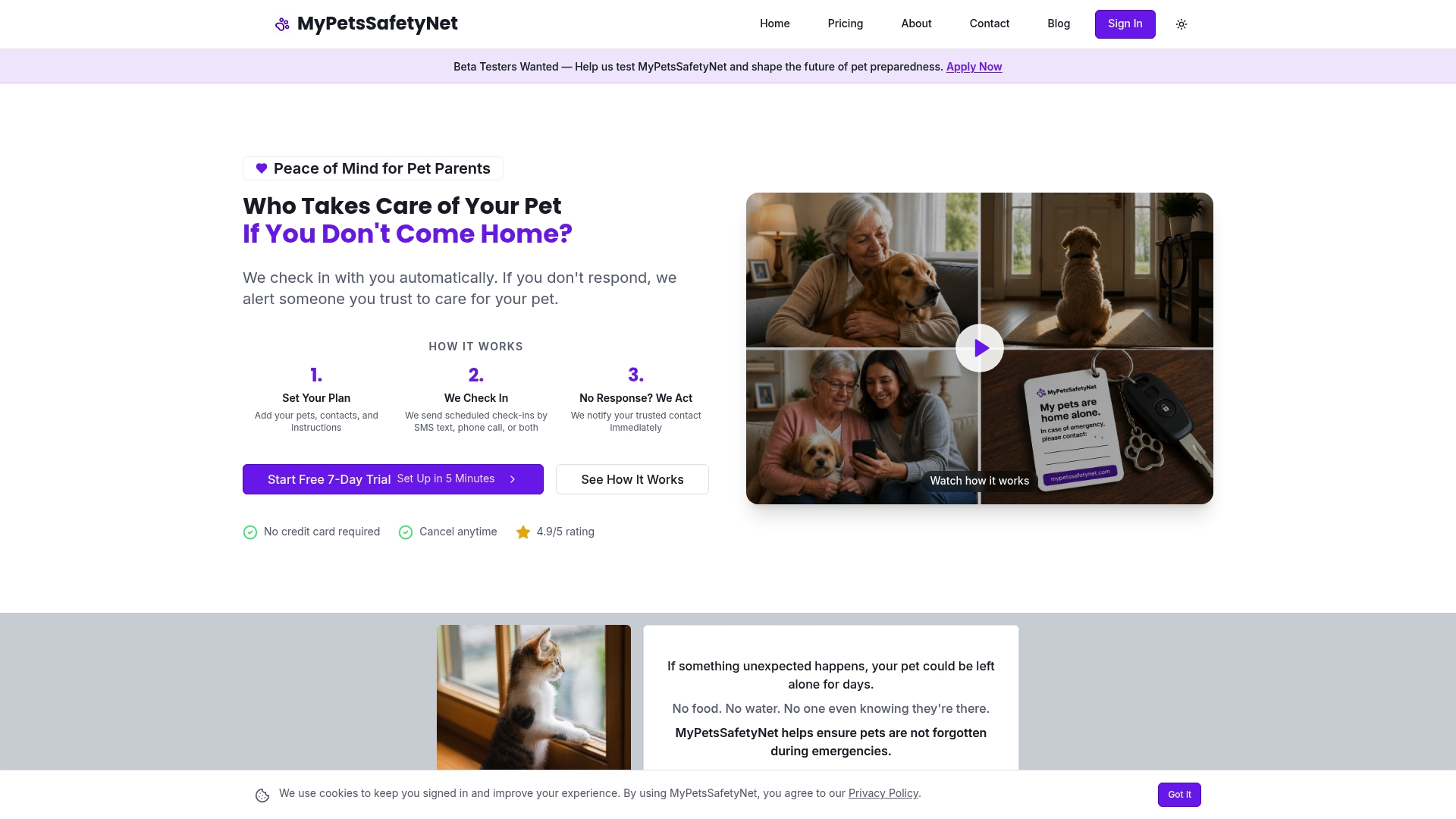
If you live alone or manage a health condition, your pets depend entirely on you. Mypetssafetynet monitors your wellness and alerts your emergency contacts the moment something seems wrong, so your pets are never left waiting. It’s one of the most direct accountability tools available for solo pet owners.
Start your wellness check-in today and give yourself, and your pets, genuine peace of mind.